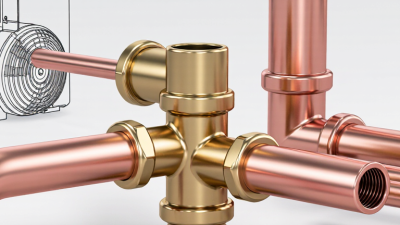
Choosing a supplier for Refrigeration Copper Fittings is a technical decision, not just a price comparison. A fitting may look flawless on a screen, yet its wall thickness, dimensions, and joining surfaces matter once it meets real pipework. “A dependable connection begins with verified material, precise dimensions, and clean workmanship,” says Dr. Elena Ward, an illustrative refrigeration expert created for this introduction; this is an editorial line, not a verified quotation. Buyers should confirm product specifications and quality documentation directly with each manufacturer.
This guide surveys ten suppliers serving refrigeration markets worldwide. It considers product range, manufacturing capability, export experience, technical support, and clarity of documentation. These details help distinguish a supplier suited to routine replacement parts from one equipped for larger project requirements. Small differences matter. A poorly matched fitting can slow installation, create rework, and complicate maintenance.
The list is a starting point, not a certification of every product or shipment. Supplier capabilities can change, and published catalogs may not show every available specification. Ask for current drawings, material details, dimensional tolerances, and traceable quality records before placing an order. Compare responses carefully. A polished website is useful, but it is not proof of consistent production. This overview aims to make that first comparison more grounded, while leaving room for buyers to verify the details themselves.
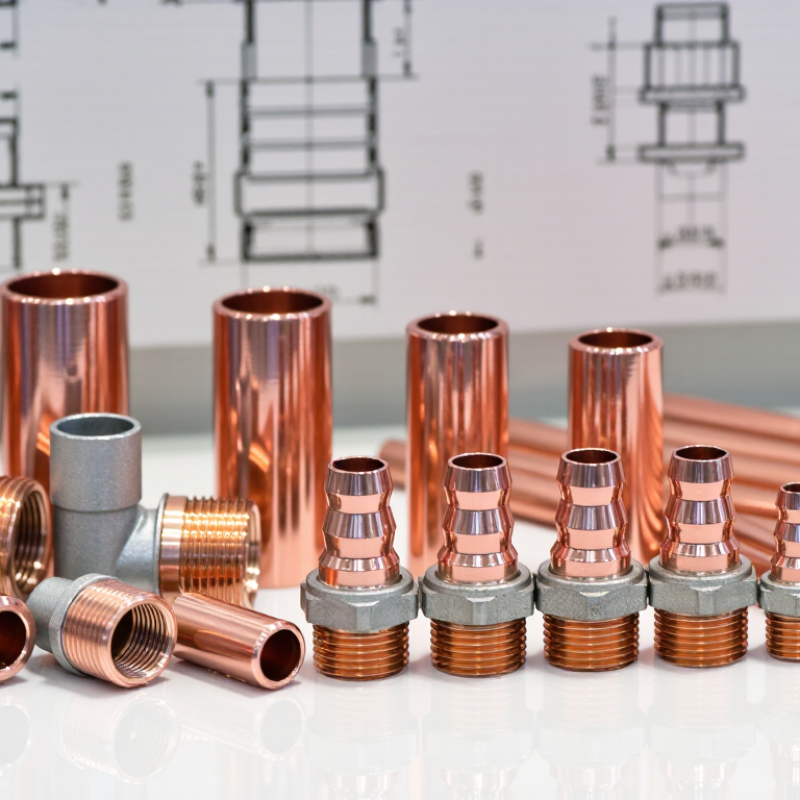
Refrigeration copper fittings are connectors that join copper tube sections and guide refrigerant through a cooling system. Common types include elbows, tees, couplings, reducers, and access fittings. An elbow changes direction; a tee splits a line. Small parts matter. Properly matched fittings help create secure joints and reduce the chance of leaks.
These fittings appear in refrigerators, freezers, display cases, ice machines, and commercial cooling equipment. In a supermarket case, for example, copper lines carry refrigerant between the compressor, condenser, and evaporator. The route may pass behind panels or through tight spaces, so compact elbows and carefully chosen tube connections can make installation easier. Fitters typically select components based on tube size, system design, and the joining method specified for the equipment.
Material quality and clean surfaces matter, but a fitting alone cannot guarantee reliable operation. Incorrect sizing, poor joint preparation, or excess heat during brazing can compromise a connection. That detail is easy to miss. In practice, access for inspection can also be limited once panels are replaced. Check for damage and contamination before assembly, and follow the equipment maker’s technical instructions. A tidy installation helps, though even neat-looking joints deserve proper testing.

The suppliers were assessed using practical evidence that buyers can verify, rather than promotional claims alone. Key factors included the range of refrigeration copper fittings, product specifications, material information, and the availability of technical documentation. We also considered manufacturing quality controls, dimensional consistency, and whether product details clearly identified connection types and intended applications. Evidence matters.
Commercial reliability was reviewed through delivery coverage, responsiveness to technical questions, and support for routine sourcing needs. Public product catalogs, certificates, and service information were treated as useful signals, not automatic proof of performance. Where details were unclear or unavailable, that uncertainty counted against a supplier’s overall assessment. Not every listing offers the same depth of evidence.
This comparison is a guide, not a laboratory test or a guarantee of future results. Supplier capabilities can vary by product line, production site, and order size. Some information may also change after publication. Buyers should confirm current specifications, traceability documents, and stock availability for the exact fitting they need. A small but important limitation: published claims cannot replace checking samples and records before a major purchase.
These ten profiles reflect common supplier strengths across the global market, rather than a verified ranking.
Supplier 1, an East Asian manufacturer, may offer broad tube sizes and high-volume production. Check wall thickness and dimensional tolerances.
Supplier 2, focused on precision machining, can suit assemblies with tight fit requirements. Ask for inspection records.
Supplier 3, serving industrial refrigeration, may provide elbows, tees, and reducers in standard configurations. Stock depth matters.
Supplier 4, based in Europe, may emphasize traceable material documentation and consistent finishing. Confirm that certificates match the delivered batch.
Supplier 5, a North American distributor, can be useful when local inventory and short replenishment times matter.
Supplier 6, specializing in custom forming, may handle unusual bends or connection designs. Samples reveal more than promises.
Supplier 7, serving Southeast Asian markets, may combine competitive production with export support. Clarify packaging and transit protection.
Supplier 8, a regional wholesaler, may simplify mixed-size orders, though its manufacturing source should be transparent.
Supplier 9, focused on brazed fittings, should explain its process controls and joining compatibility.
Supplier 10, a smaller specialist, may offer responsive engineering help but limited capacity. That trade-off deserves attention.
For every supplier, compare alloy specifications, pressure ratings, test methods, and delivery consistency. Copper fittings can look nearly identical on a bench, yet small dimensional differences may complicate installation. Even polished paperwork needs practical verification.
Suppliers of refrigeration copper fittings differ less by headline claims than by the details of their product ranges. Some focus on common elbows, tees, couplings, and reducers for routine repairs. Others offer access fittings, service valves, or made-to-order dimensions for equipment manufacturers. Check whether product data lists connection type, tube size, wall thickness, and material clearly. Details matter.
Market coverage also shapes a supplier’s strengths. A distributor serving local contractors may prioritize readily available sizes and small order quantities. A manufacturer supplying cold-storage projects may emphasize volume capacity, export packaging, and consistent production batches. Neither profile is automatically better; the right fit depends on your equipment and purchasing schedule. Ask how stock availability and lead times are confirmed, rather than relying on a broad catalog alone.
Capabilities become visible in quality records and technical support. Useful evidence can include dimensional inspection procedures, batch traceability, and pressure-test information where applicable. Confirm that fittings match the specified joining method, such as brazing or flared connections, and request drawings when tolerances matter. A polished datasheet is helpful, but it cannot answer every installation question. Not always. Comparing ten suppliers fairly means weighing product breadth, market experience, documentation, and response quality together. Some details are easy to miss until a fitting reaches the job site.
How to compare suppliers by products, markets, and capabilities
Compare suppliers by checking their coverage of these established refrigeration copper fitting categories, then assess market coverage, applicable standards, size range, and technical support separately. The bars mark checklist categories, not supplier rankings, market shares, or verified claims about individual suppliers.
Choosing a refrigeration copper fittings supplier starts with the product details, not the catalog photographs. Ask for material specifications, dimensional tolerances, and confirmation that fittings suit your system’s refrigerant and pressure range. Small mismatches matter. An elbow may look correct but still delay installation if its connection size or wall thickness differs from the drawings. When possible, request sample pieces and check their fit and finish with your installer.
Consistency matters as much as price. Compare lead times, minimum order quantities, packaging, and the supplier’s process for handling nonconforming parts. A dependable supplier should explain its inspection steps and how it protects copper ends from dirt or damage during shipping. For repeat orders, ask whether specifications and batch records remain available. Those records can help resolve inspection questions later.
Test the technical support, too. Send a drawing or describe a tight service-space installation, then note whether the reply is specific and clear. Good questions may cover tube dimensions, joining methods, and operating conditions. A low quote can be tempting. It is easy to overlook freight damage, uneven sizing, or slow replacements when comparing unit prices. No checklist catches everything; field conditions may reveal details the drawing missed.
Supplier evaluation checklist: compare documented product capabilities and service criteria rather than treating this table as a ranked list of companies.
| No. | Evaluation Factor | What to Check | Useful Evidence or Benchmark |
|---|---|---|---|
| 1 | Material and Product Range | Confirm that the supplier offers the fitting types, copper grades, sizes, and end connections required for the system, such as elbows, tees, reducers, couplings, and return bends. | Product catalogue, material specifications, dimensional drawings, and samples matched to the project bill of materials. |
| 2 | Standards and Product Compliance | Check that the exact fitting type and intended application are covered by the declared standard or applicable local requirements. Standards can differ by fitting design and market. | Relevant declarations and test documentation. Examples include ASME B16.22 for wrought copper and copper-alloy solder-joint pressure fittings and the applicable parts of EN 1254 for copper and copper-alloy fittings. |
| 3 | Dimensions and Connection Compatibility | Verify outside diameter, wall or fitting dimensions, tolerances, connection style, and compatibility with the mating tube and joining process. | Dimensioned drawings and inspection records; confirm whether dimensions are stated in metric or inch units and whether the connection is designed for the specified tube standard. |
| 4 | Pressure and Temperature Suitability | Ensure that the fitting is suitable for the refrigerant, design pressure, operating temperature, and service conditions of the application. | Manufacturer’s ratings and technical data for the specific fitting configuration. Do not assume a rating from appearance or nominal size alone. |
| 5 | Joining Methods | Check whether the supplier supports the required connection method, such as brazing, soldering, or mechanical connection, and whether installation instructions are available. | Product documentation identifying approved joining methods, compatible materials, and any installation limitations. |
| 6 | Cleanliness and Sealed Packaging | Refrigeration circuits require control of internal contamination and moisture. Review how open ends are protected during production, storage, and shipping. | Documented cleaning and packaging procedures, protected or capped ends, and agreed inspection requirements for delivered goods. |
| 7 | Quality Control and Traceability | Assess how the supplier controls incoming material, forming, joining surfaces, dimensional inspection, and nonconforming products. | Quality-management documentation, inspection plans, lot or batch identification, and material or test records where specified in the purchase contract. |
| 8 | Production Capacity and Lead Time | Compare the supplier’s ability to meet order quantities, repeat-order requirements, and project schedules, including peak-demand periods. | Written lead-time commitments, capacity information, order-size limits, and a clear process for communicating delays or changes. |
| 9 | Packaging and International Logistics | Consider protection against deformation, contamination, corrosion during transit, and loss of small components. Confirm export documentation needs. | Packaging specifications, carton or pallet details, shipping terms, country-of-origin documents where required, and procedures for reporting transit damage. |
| 10 | Technical Support and After-Sales Service | Check whether the supplier can answer technical questions, assist with product selection, and handle complaints or replacement requests within agreed timeframes. | Named technical contact, documented warranty and claims process, response-time expectations, and availability of current product documentation. |
Verify standards, ratings, and regulatory requirements for the specific fitting, refrigerant, system design, and destination market before purchase.