What Is a Refrigeration Tee and How Does It Work
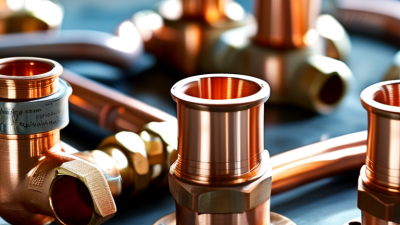
A Refrigeration Tee is a compact fitting with a surprisingly important job: it connects three sections of refrigerant piping. In a system, that junction may split flow, bring lines together, or connect a branch to a main run. Picture copper tubing leaving a compressor, turning through a tee, and continuing toward the condenser. The fitting looks simple. Its placement and size are not.
As refrigeration piping specialist Maya Chen puts it, “A tee works well only when its branch, size, and orientation suit the refrigerant circuit.” This is an editorially composed summary, not a verified quotation from a published source. That distinction matters: fitting choices should be checked against manufacturer instructions, system design, and applicable technical guidance—not a catchy line.
What happens inside the tee depends on the circuit. Refrigerant may be vapor, liquid, or a mixture, and flow can behave differently as pressure and operating conditions change. A tee that seems convenient on a drawing can create uneven distribution, unwanted pressure loss, or trouble returning oil through the piping. Small details matter. Branch direction, tubing diameter, joint quality, and the surrounding pipe layout all deserve attention.
This guide explains what a Refrigeration Tee is, how refrigerant moves through its passages, and where tees commonly appear. It also considers selection and installation factors that affect performance. Real systems vary, so there is no universal tee arrangement. That’s worth remembering. A clear understanding of the fitting helps technicians and designers ask better questions before the tubing is joined.
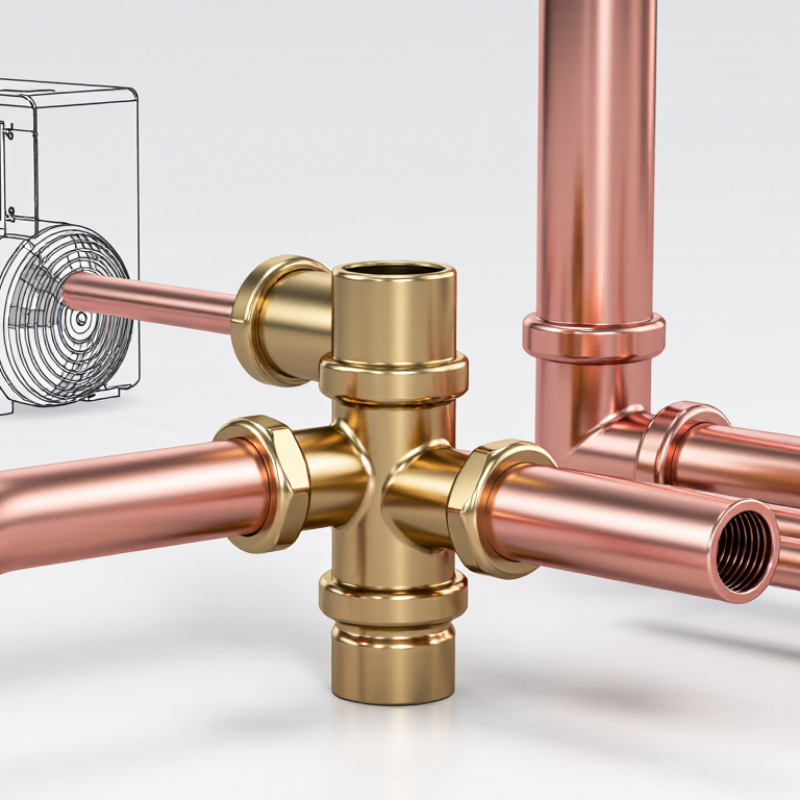
What a Refrigeration Tee Is: A Three-Port Branch Fitting
A refrigeration tee is a three-port fitting that connects a branch line to a main pipe. Two ports continue the main run; the third creates a side connection. Flow may split or combine, depending on the system layout. The fitting does not control flow. That detail matters. Equal tees have matching port sizes, while reducing tees connect pipes of different diameters. In a refrigeration circuit, the tee must suit the line’s purpose, refrigerant, operating pressure, and compatible piping material. A suction-line branch, for example, needs careful layout so oil can return toward the compressor.
The International Institute of Refrigeration’s 2023 report, The Role of Refrigeration in the Global Economy, estimates that refrigeration and air conditioning use about 20% of global electricity. That figure is not a tee-performance measure, but it shows why sound system design matters. ASHRAE Handbook—Refrigeration (2022) covers refrigerant-piping design, including pressure drop and oil return. These are practical checks when locating and sizing a branch fitting. A poorly matched tee can add unwanted resistance or complicate oil movement. Even a neat-looking joint may be wrong. Confirm port sizes, flow direction, material compatibility, and the equipment maker’s piping requirements before installation; actual layouts can be less tidy than diagrams suggest.
How a Tee Divides Refrigerant Flow Through Its Three Openings
A refrigeration tee is a three-opening fitting: one passage carries refrigerant in, while two branches divide or combine the flow. The split is rarely equal. Each branch’s length, diameter, bends, and downstream pressure influence how much refrigerant enters it. Inside the fitting, the stream turns and separates; liquid refrigerant may distribute differently from vapor, especially when droplets and gas travel together. Not a simple fork.
For example, a technician tracing a liquid line may find one branch colder because its circuit receives more refrigerant. ASHRAE’s Handbook—Refrigeration treats fitting geometry and flow conditions as factors in pressure-drop calculations; a tee’s shape is not a minor detail. The International Institute of Refrigeration estimates that refrigeration uses about 17% of global electricity, a reminder that small system losses matter at scale. That figure describes refrigeration broadly, not tee losses specifically. Small details matter. In practice, engineers check the refrigerant state, branch loads, and manufacturer-independent fitting dimensions before sizing a tee. Even then, calculations are an approximation: actual distribution can shift with operating conditions, and I would not assume equal flow just because the outlets look identical.
What Is a Refrigeration Tee and How Does It Work?
A refrigeration tee has one inlet and two branch openings. It divides refrigerant flow between the branches, while the outlet mass-flow rates together equal the inlet rate in steady operation.
Illustrative example: an inlet flow of 0.060 kg/s divides into branch flows of 0.036 kg/s and 0.024 kg/s. The split is not necessarily equal; it depends on tee geometry, refrigerant conditions, and resistance in each branch.
How ASTM B16.22 Tees Connect ASTM B280 Refrigeration Tubing
A refrigeration tee creates a branch in a copper line, directing refrigerant toward an evaporator, condenser, or service connection. The fit matters. ASTM B280 covers seamless copper tubing for refrigeration service, while ASTM B16.22 covers wrought copper and copper-alloy solder-joint pressure fittings. These standards help installers match tubing and fittings by nominal size and joint dimensions. They do not, by themselves, confirm that an assembly suits every refrigerant or operating pressure.
In practice, the tee’s straight run and branch must align with the system layout. Clean, square tube ends help the joint seat evenly; a poorly prepared end can leave gaps or restrict flow. ASTM B280 and B16.22 are useful specification references, but designers must also check equipment requirements and applicable pressure-temperature ratings. Small details matter. Even a slight misalignment can put stress on a soldered joint.
Tips: Confirm tube outside diameter and fitting size before assembly. Keep the tube and socket clean, and follow the specified joining procedure. After installation, inspect and pressure-test the circuit using the equipment maker’s instructions and relevant safety practices. One easy-to-miss point: a correctly sized tee is not automatically suitable for every refrigerant blend.
How Equal and Reducing Tees Are Sized by Copper Tube Outside Diameter
A refrigeration tee divides or joins refrigerant flow, but its size describes the copper tube outside diameter (OD), not the tube’s inside diameter. For an equal tee, all three connections match. A fitting marked 3/8 × 3/8 × 3/8, for example, accepts tubing with a 3/8-inch OD at the run and branch. That distinction matters. Tube wall thickness can vary, while the OD remains the sizing reference.
A reducing tee has different connection sizes. Its two run openings may be 7/8 inch, with a 3/8-inch branch, for example. Read each dimension carefully: markings may list the run sizes first and the branch last, but conventions can vary. Check the fitting body or product drawing rather than guessing from its shape. A caliper can help confirm a tube’s OD when markings are missing, though measuring an accessible, clean section gives the clearest result.
Before ordering, compare every tee opening with the tubing it will join, including the branch. Do not choose by nominal pipe size or by appearance alone. Small differences can leave a poor fit. I find this part easy to rush; it is also where an otherwise suitable fitting can be selected incorrectly. Confirm the fitting’s stated dimensions and application against the system specifications, especially when replacing an existing part.
How Brazing, Nitrogen Purging, and Pressure Testing Verify Tee Joints
What Is a Refrigeration Tee and How Does It Work
A refrigeration tee splits or combines refrigerant flow, so each branch depends on sound brazed joints. Before heating, the copper surfaces must be clean, aligned, and dry. A small gap can become a leak path.
Not a minor detail.
During brazing, technicians flow a low, well-regulated stream of dry nitrogen through the tubing. This limits internal copper oxide, which can later break loose and obstruct valves. The Copper Development Association’s Copper Tube Handbook reports copper thermal conductivity near 391 W/m·K at 20°C; heat spreads quickly, so controlled torch movement matters. Too much heat can damage nearby components. Too little can leave an incomplete joint. Even experienced installers must judge the fit carefully.
After cooling, the circuit is pressure-tested with dry nitrogen at the pressure specified by the equipment maker and applicable requirements. Never assume one test pressure suits every system. A calibrated gauge, regulator, and leak-detection solution help reveal bubbles around the tee and braze edges. Hold the test long enough to check for pressure loss, accounting for temperature changes. ASTM B280 specifies requirements for copper tube used in refrigeration service; it does not replace proper joint inspection.
One imperfect point: a stable gauge alone cannot prove every joint is sound. Inspect closely, then document the result.