Leave Your Message

How to Choose the Right Liquid Line Filter Drier in 2026?

Choosing the right Liquid Line Filter Drier in 2026 starts with the refrigeration system, not the catalog. This component helps remove moisture, acids, and solid contaminants before they reach sensitive parts such as an expansion valve. Small part. Serious job. Yet choosing a larger model does not automatically mean better protection.

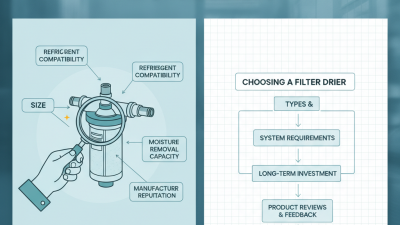
Start by confirming the refrigerant, system capacity, and required connection size. Then compare the manufacturer’s rated capacity and pressure-drop data with the equipment’s operating conditions. Refrigerant compatibility matters, especially when servicing newer or converted systems. Check the approved application details rather than relying on a familiar model number. A mismatch can restrict flow or reduce effective moisture removal. That detail is easy to overlook.

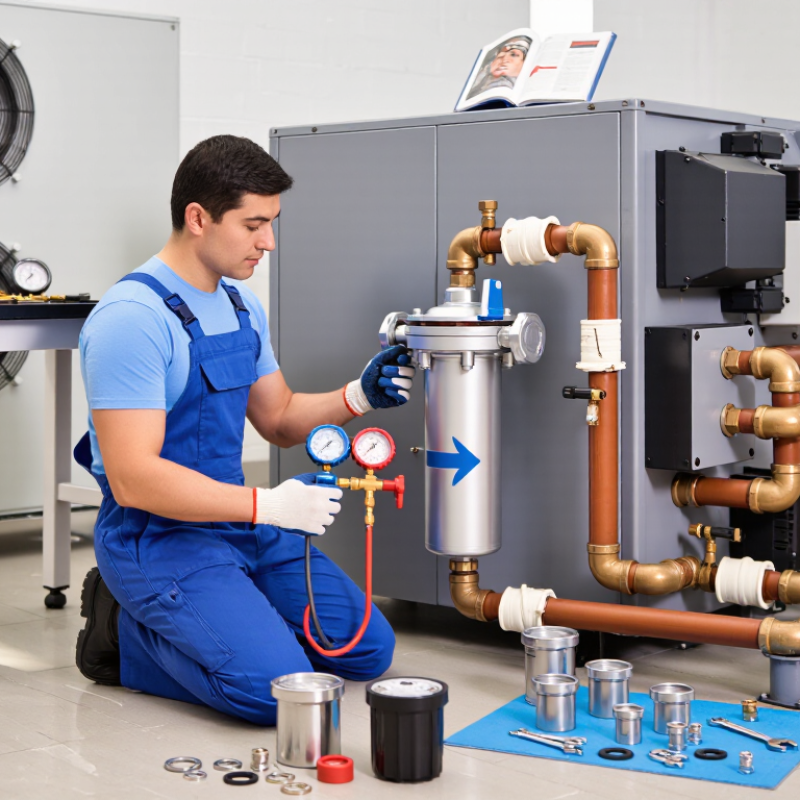
Installation conditions deserve equal attention. Note the direction-of-flow arrow, available space, and whether the system needs a replaceable-core design. In a heat pump, the correct drier arrangement may depend on the manufacturer’s piping design. After a compressor burnout or major repair, contamination levels can also change the selection. There is no single choice for every job.

A careful decision uses the equipment documentation, the drier manufacturer’s technical data, and measured system conditions. A qualified refrigeration technician can assess those details and install the component using sound service practices. I would not select a drier from tonnage alone; that shortcut can miss refrigerant, pressure, and application differences. Even a well-chosen part cannot compensate for poor evacuation or unresolved contamination. The sections ahead explain how to compare specifications, avoid common sizing mistakes, and choose a filter drier that fits the system’s actual needs.
How to Choose the Right Liquid Line Filter Drier in 2026?

Identify refrigerant, oil, and safety class using ASHRAE 34 (A1 or A2L)

Choosing a liquid-line filter drier in 2026 starts with the exact refrigerant, not the cabinet label alone. Check the equipment nameplate, service records, and lubricant specification. A refrigerant change can mean a different oil, seal, and drier compatibility requirement. Small detail, big consequence.

ASHRAE Standard 34-2022 classifies refrigerants by toxicity and flammability. Its A toxicity class indicates an occupational exposure limit of at least 400 ppm. A1 refrigerants show no flame propagation under the standard’s test conditions. A2L refrigerants are mildly flammable, with burning velocity no greater than 10 cm/s. These figures describe classification tests, not permission to ignore equipment instructions. Labels matter. Confirm the refrigerant’s full designation before selecting a drier.

Match the drier’s materials and desiccant to the specified refrigerant and oil, such as POE or mineral oil; do not assume they are interchangeable. Then check pressure rating, connection size, and moisture-removal capacity against the system requirements. AHRI Standard 710 provides performance-rating methods for liquid-line filter driers, useful when comparing rated capacity. A2L classification also makes approved service procedures and ventilation relevant. It is easy to focus on the safety letter and miss the oil specification. Check both.
Match desiccant type and 3 Å molecular-sieve pores to system needs

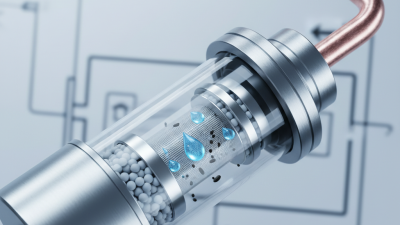
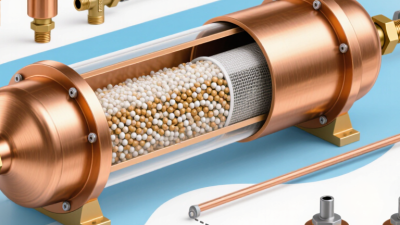
A liquid line filter drier protects refrigeration components by capturing moisture and debris before they travel through the system. Desiccant choice matters. A 3 Å molecular sieve has pores sized to adsorb water while limiting uptake of larger refrigerant molecules. That selectivity makes it a common choice for many systems, but it is not a universal answer.

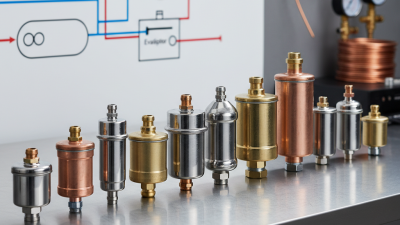
Match the desiccant to the refrigerant, lubricant, and expected contamination. Molecular sieve is effective for moisture control; activated alumina can help capture acids formed after contamination or component failure. Some driers combine desiccants, though the blend must suit the system materials and operating conditions. Check equipment specifications rather than assuming one type fits every installation. Small details matter.

Sizing also deserves care. A drier that is too small may restrict flow or reach its moisture capacity sooner; an oversized unit is not automatically better. Compare rated capacity, connection size, pressure-drop data, and the system’s moisture load. It is tempting to choose by tonnage alone. That shortcut can miss oil compatibility or service conditions, and I would reconsider it before installation. Follow the manufacturer’s technical guidance, especially after a burnout or major repair, when acid and moisture levels may differ from normal operation.

Check refrigerant moisture limits against AHRI 700 purity specifications

How to Choose the Right Liquid Line Filter Drier in 2026?

AHRI 700 sets refrigerant purity specifications, including maximum water content. Check the current edition and the exact refrigerant designation before selecting a liquid line filter drier. Limits can differ by refrigerant. A purity limit describes the refrigerant, not the drier’s moisture-removal capacity.

Compare the drier’s published water capacity with the system’s refrigerant charge and expected moisture exposure. Confirm compatibility with the refrigerant and lubricant, then check rated flow and pressure drop. A unit that removes moisture well but restricts liquid flow is not a good match. Small details matter.

Use supplier capacity data under stated test conditions; ratings are not always directly comparable. During commissioning or service, follow suitable procedures to keep air and moisture out, and use system indicators as a warning—not a precise laboratory measurement. I would not treat the AHRI number as a complete design answer. Real systems vary, and a clean refrigerant sample does not prove that every part of the circuit is dry.

How to Choose the Right Liquid Line Filter Drier in 2026?

Check refrigerant moisture limits against AHRI 700 purity specifications.

The chart shows a commonly specified AHRI 700 maximum water content of 10 ppm by mass for these refrigerants. Select a filter drier suited to the refrigerant and system conditions, and verify the applicable AHRI 700 table and edition before specifying it. The purity limit is not a filter-drier sizing value.

Size rated capacity and pressure drop using AHRI 710 performance data

Choosing a liquid-line filter drier in 2026 means matching more than pipe connections. Identify the refrigerant, design mass flow, and expected operating range. Compare AHRI 710 performance data tested under equivalent conditions. Check the basis. A capacity figure without its test conditions can mislead.

Treat rated capacity as a standardized comparison, not a guarantee of field performance. Confirm the published flow capacity for your refrigerant and design load, then review pressure drop at that flow. A drier that appears adequate by nominal capacity may still create excessive resistance during peak demand. Check the data carefully.

Excessive liquid-line pressure drop can reduce available subcooling and may cause refrigerant to flash downstream. Consider inlet liquid temperature, subcooling margin, and actual piping conditions alongside the rating. I would question any selection based on one catalog number alone. Real loads vary. Allow some room for those variations, and verify the manufacturer’s performance data before installation.

Confirm connection size, flow direction, and service requirements before installation

Choosing a liquid line filter drier starts with the system specifications, not the cabinet’s available space. Match the connection size to the actual tube outside diameter and connection type, such as solder or flare. A fitting that nearly matches is still a mismatch. Check the manufacturer’s capacity data against the system’s refrigerant, operating conditions, and required flow rate.

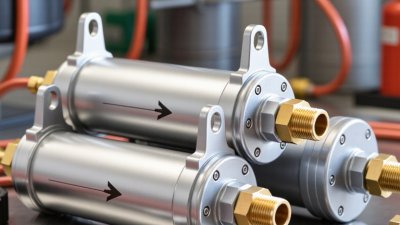
Confirm the marked flow direction before installation. The arrow should point with liquid flow toward the metering device. This detail is easy to overlook when a unit is mounted in a cramped equipment bay. Check it again before brazing. Also verify the drier’s pressure rating and compatibility with the refrigerant and lubricant; similar-looking systems may have different requirements.

Plan for service access, too. Leave enough room to inspect connections and replace the drier later without disturbing nearby wiring or piping. If brazing is required, follow the equipment and drier instructions, including precautions to limit heat exposure. A quick measurement can still be wrong, especially on an older line with paint or insulation. Compare the part’s documentation with the system data, then check the fit and flow arrow at the installation point. Short checks matter.

How to Choose the Right Liquid Line Filter Drier in 2026? — Confirm Connection Size, Flow Direction, and Service Requirements Before Installation

Selection Dimension What to Check Practical Guidance Before Installation
Connection size Measure or confirm the liquid-line tube outside diameter and identify the connection type. Common copper tube sizes include 1/4 in, 3/8 in, 1/2 in, and 5/8 in. These are examples, not a complete list; the required size depends on the system piping. Match the drier connections to the line and fitting type. Do not select by nominal size alone; verify the product specification and connection details.
Flow direction Check whether the drier is intended for one-way flow or reversible heat-pump operation. A standard one-way drier has a specified inlet and outlet. Reversible systems generally require a drier designed for bi-directional flow. For a one-way model, align the body arrow with normal refrigerant flow toward the metering device. For a bi-flow model, follow its installation instructions.
Refrigerant and lubricant compatibility Confirm the equipment refrigerant and lubricant type against the drier’s published compatibility information. Desiccant, seals, and construction must be suitable for the refrigerant and oil used. Compatibility should be verified for the specific system, especially when retrofitting. Use the equipment documentation and the drier manufacturer’s technical data; do not assume that a drier is suitable for every refrigerant.
Capacity and pressure drop Check the rated capacity and pressure-drop data for the system’s refrigerant, operating conditions, and required mass flow. Capacity ratings depend on test conditions and refrigerant. A larger-looking connection alone does not establish that a drier has adequate capacity. Compare published ratings with the equipment design data. Avoid undersizing, and do not rely on a rating from a different refrigerant or condition.
System pressure and temperature Verify the drier’s allowable working pressure and temperature range. The component must be rated for the system’s expected operating conditions and applicable installation requirements. Check the component rating against equipment specifications and local codes before fitting it.
Service requirements Determine whether the application calls for a sealed, replaceable-core, or other serviceable design. Sealed driers are replaced as a complete assembly. Replaceable-core designs allow the core to be changed when the housing and application are intended for that service. Allow suitable access for inspection and replacement. Follow the equipment procedure and the drier’s service instructions.
System condition Consider whether the circuit has been opened, repaired, or exposed to moisture or contamination. A liquid-line filter drier removes moisture and helps capture contaminants; it does not replace proper evacuation or cleanup procedures. Install a new drier when required by the service procedure. Keep it sealed until installation and minimize exposure to ambient air.
Installation and brazing Check the required mounting orientation, clearance, and connection instructions. Installation details vary by model. Excessive heat during brazing can damage internal components or seals. Follow the product instructions, protect the drier from overheating, and use the specified brazing precautions. Pressure-test and evacuate the system according to the equipment procedure.