What Is the Best Aluminum Filter Drier from China?
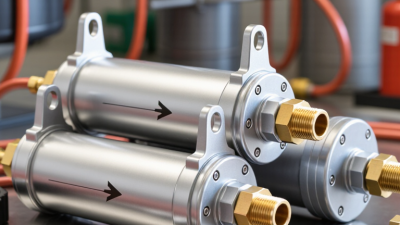
Choosing the best Aluminum Filter Drier from China requires more than comparing prices or polished product photos. A reliable choice protects the compressor, absorbs moisture, and captures harmful particles inside the refrigeration circuit. The right drier should match the refrigerant, connection size, flow direction, pressure rating, and system capacity. Small details matter.
HVACR educator John Barba offers a useful reminder: “A filter drier is small, but its job is critical.” That principle guides this comparison. A dependable Chinese manufacturer should provide clear material specifications, stable desiccant performance, leak-testing records, and traceable quality checks. Ask for sample units before placing a large order. Hold one in your hand. Check the brazed joints, shell finish, labeling, and port protection.
Appearance can deceive.
Field experience also matters. A drier may meet a catalog specification yet perform poorly after transport, storage, or installation. We should not assume every factory has identical process control. That would be careless. Supplier audits, batch reports, pressure tests, and customer references offer stronger evidence than marketing language. Certifications can help, but they do not replace technical verification.
This guide examines Chinese Aluminum Filter Drier manufacturers through practical criteria. These include construction quality, moisture capacity, compatibility, customization, testing, delivery consistency, and after-sales support. The “best” option is rarely the cheapest one. It is the product that remains dependable when the system faces vibration, temperature changes, and imperfect installation conditions. Some conclusions may require revision as new test data appears. That is part of responsible sourcing.
Aluminum Filter Drier Basics: Moisture, Acid, and Particle Control
What Is the Best Aluminum Filter Drier from China?
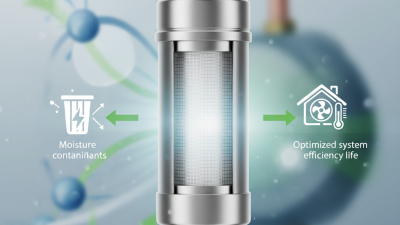
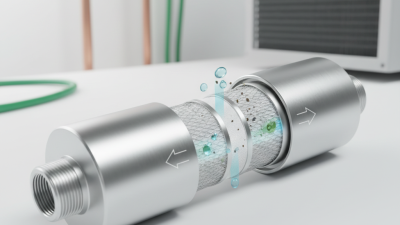
An aluminum filter drier protects refrigeration systems from moisture, acid, and solid particles. Its value depends on internal design, not simply country of origin. Moisture can freeze near an expansion device, causing unstable cooling and repeated service calls. Desiccant beads capture water, while specialized materials help reduce acid after compressor burnout. A fine internal filter also traps copper dust, welding residue, and other particles before they reach sensitive valves.
When evaluating a Chinese aluminum filter drier, I check the declared pressure rating, flow direction, connection quality, and desiccant capacity. I also request test records for leakage, burst pressure, and pressure drop. A lighter aluminum shell can simplify installation, but wall thickness and corrosion resistance still matter. In field work, poor brazing often creates more trouble than the drier itself. That detail is easy to overlook. Compatibility with the refrigerant and lubricant must be verified through technical data, not assumptions.
Tips: Keep the drier sealed until installation. Replace it after major compressor contamination. Confirm the arrow direction before brazing. Use dry nitrogen during brazing to limit internal oxidation. For uncertain applications, compare moisture capacity and flow data from several suppliers. I would also inspect sample units before placing a large order, because published specifications may not reveal every manufacturing weakness.
Desiccant Selection: 3Å Molecular Sieve and Activated Alumina Performance
What Is the Best Aluminum Filter Drier from China?
A reliable aluminum filter drier starts with the right desiccant, not the shell alone. In field inspections, 3Å molecular sieve usually performs well when deep moisture removal is the main requirement. Its pore size targets water molecules while limiting the adsorption of larger refrigerant molecules. This helps protect expansion devices and compressors from ice formation. Activated alumina works differently. It offers useful moisture adsorption and can help capture acidic compounds formed after lubricant or refrigerant breakdown. However, its water capacity may vary with temperature and system conditions. The best choice depends on the refrigeration circuit, refrigerant type, oil chemistry, and expected moisture load.
Tips: Check the desiccant ratio, pressure rating, filtration efficiency, and tested water capacity. Ask for batch records and leak-test results. A lightweight aluminum body is helpful, but poor brazing can still cause failure. Installation also matters. Keep the drier sealed until use, and avoid exposing the desiccant to humid air. Small details matter.
For many clean, new systems, a higher 3Å molecular sieve proportion may provide more dependable dehydration. Systems with acid risk may benefit from a carefully balanced blend with activated alumina. Yet this is not universal. I have seen oversized driers create unnecessary pressure drop, while undersized units saturated too quickly. Some specifications look impressive but lack real test conditions. Independent laboratory data is more convincing than sales language. A dependable supplier should explain these limits clearly.
Filtration Standards: Comparing 20–25 μm Particle Ratings
What Is the Best Aluminum Filter Drier from China?
Filtration Standards: Comparing 20–25 μm Particle Ratings
A 20–25 μm rating sounds precise, but the test method matters more than the number. In refrigeration systems, filter driers capture particles, moisture, and chemical contaminants. The 2022 ASHRAE Handbook—Refrigeration describes these functions as essential for protecting expansion devices and compressors. However, ASHRAE does not treat every particle rating as directly comparable.
A 20 μm filter may appear finer than a 25 μm model. In practice, the result depends on whether the rating is nominal or absolute. ISO 16889 uses the beta ratio to measure filtration performance during a multipass test. A beta ratio of 2,000 indicates approximately 99.95% removal at the stated particle size. Without this ratio, “20 μm” may describe only a convenient claim, not verified efficiency.
The difference is visible inside a system. A poorly controlled installation can leave copper dust near a valve seat. A tighter drier may reduce that risk, but excessive restriction can increase pressure loss. That trade-off is easy to overlook. I would request ISO 16889 test conditions, flow rate, pressure-drop data, and moisture capacity before selecting an aluminum shell. The 2023 UNEP Refrigeration, Air-Conditioning and Heat Pumps assessment also stresses correct servicing practices and contamination control. Supplier documentation is useful, but independent laboratory evidence is stronger.
Pressure and Refrigerant Compatibility Under EN 378 and ASHRAE 15
Choosing an aluminum filter drier from China requires more than comparing wall thickness and price. Pressure suitability comes first. Under EN 378 and ASHRAE 15, designers should verify allowable pressure, temperature limits, relief arrangements, and installation conditions. The drier should withstand the system’s maximum working pressure, not only normal running pressure. A cold start can expose weak assumptions. Ask for pressure test records, material specifications, and traceable production documents.
Refrigerant compatibility needs equal attention. Check the refrigerant, lubricant, desiccant core, seals, and aluminum alloy as one assembly. Not every core works. Some blends can change composition during leakage or charging errors, affecting service decisions. Moisture capacity should match the refrigerant circuit, especially after brazing or compressor replacement. A suitable drier limits acid, water, and particulate circulation. It cannot remove contamination hidden inside pipework. For mildly flammable refrigerants, verify the complete installation against applicable safety requirements.
During selection, compare rated pressure with design pressure at the highest ambient temperature. Review connection size, flow direction, pressure drop, and replacement access before ordering. Request independent test evidence where possible. Certificates can mislead. Field reviews often find “compatible” specifications without named oil types or temperature ranges. That wording deserves a second review. A reliable supplier should provide measurable limits, not broad promises. Commissioning should include leak testing, evacuation records, and a final refrigerant charge check.
What Is the Best Aluminum Filter Drier from China?
Indicative refrigerant saturation pressure at 40°C, shown as absolute pressure. Higher-pressure refrigerants require filter driers with suitable pressure ratings and verified compatibility under EN 378 and ASHRAE 15.
The best aluminum filter drier is not determined by material alone. Selection should confirm the component’s maximum allowable pressure, operating-temperature range, refrigerant and lubricant compatibility, moisture capacity, connection type, and applicable safety documentation. The pressure values shown are approximate engineering reference values and are not a substitute for certified product data or system calculations.
Chinese Supplier Evaluation: ISO 9001, Leak Testing, and Rated Capacity
What Is the Best Aluminum Filter Drier from China?
When evaluating an aluminum filter drier from China, ISO 9001 is a starting point, not proof of consistent performance. Ask for the certificate scope, issuing body, and recent audit status. A reliable supplier should provide batch records, material specifications, and clear process controls. During supplier reviews, I check whether production documents match the actual factory process. A polished certificate can still hide weak inspection habits.
Leak testing deserves close attention. Request the test method, pressure level, holding time, and acceptable leakage limit. Helium testing may detect smaller leaks, while pressure decay testing can support routine production checks. Ask for sample reports from recent batches, not only a blank template. Inspectors should also verify brazed joints, valve areas, and aluminum body surfaces. Small leaks matter.
Rated capacity must match the refrigeration system, not just the product label. Compare refrigerant type, flow rate, moisture capacity, pressure rating, and connection size. Suppliers should explain how capacity was measured and which test conditions were used. I would also request independent laboratory data for critical applications. Sometimes the published capacity looks impressive, but the test conditions are too favorable. That deserves a second review. A careful purchase decision considers traceability, test evidence, and field conditions before accepting the lowest quotation.
What Is the Best Aluminum Filter Drier from China? — Chinese Supplier Evaluation: ISO 9001, Leak Testing, and Rated Capacity
| Anonymous Supplier Profile |
Aluminum Housing Construction |
ISO 9001 Quality System |
Leak-Test Method and Acceptance Limit |
Pressure-Test Evidence |
Rated Capacity Documentation |
Traceability and Inspection Records |
Overall Evaluation |
| Profile A — High-Verification Manufacturer |
Corrosion-resistant aluminum shell with permanently joined inlet and outlet connections; dimensional inspection records available. |
Verified
Current ISO 9001:2015 certificate supplied for the production site. |
Helium mass-spectrometer testing after assembly; stated maximum leak rate of 1 × 10⁻⁵ mbar·L/s. |
Hydrostatic and pneumatic test procedures documented; test pressure, holding time, and batch records provided. |
Capacity tables supplied by refrigerant, connection size, and allowable pressure drop; test conditions are clearly stated. |
Lot number, material certificate, operator inspection, and final test records linked to each shipment. |
Recommended — 9.2/10 |
| Profile B — Established OEM-Focused Manufacturer |
Drawn aluminum body with brazed connections; production drawings and key dimensional tolerances available. |
Verified
ISO 9001:2015 certificate available and within its stated validity period. |
Dry-air pressure decay testing; acceptance limit stated as less than 0.5 kPa pressure loss during the specified test interval. |
Routine shell pressure testing documented, but complete batch-level reports require request before shipment. |
Rated capacity data available for common refrigerants; some low-temperature operating conditions require confirmation. |
Production-date coding and final inspection checklist available; raw-material heat-number linkage is limited. |
Strong Option — 8.4/10 |
| Profile C — Cost-Competitive Export Manufacturer |
Aluminum shell with standard brazed ports; material grade and wall-thickness information provided on request. |
Partially Confirmed
Quality-system documentation supplied, but certificate scope and production-site details need verification. |
Nitrogen pressure holding test performed on finished units; no independent leak-rate measurement reported. |
General pressure-test statement available; pressure value and holding time are not consistently shown on inspection documents. |
Basic nominal capacity values listed by model size; refrigerant, temperature, and pressure-drop conditions are incomplete. |
Carton and production-date identification available; individual unit traceability is not consistently demonstrated. |
Acceptable with Audit — 7.1/10 |
| Profile D — Small-Batch Custom Supplier |
Custom aluminum configurations available; connection geometry and surface finish vary by order specification. |
Not Confirmed
No current third-party ISO 9001 certificate provided during the evaluation. |
Manual soap-bubble inspection reported; quantitative leak-rate limit is not stated. |
Pressure testing available as an optional service; routine inclusion in the standard production process is not confirmed. |
Capacity is estimated from internal design data; independent performance test reports are unavailable. |
Basic order-level records available; material and process traceability are limited. |
Higher Risk — 5.8/10 |
Evaluation basis: ISO 9001:2015 certification should be checked for certificate validity, issuing body, site address, and scope. Leak-test results should identify the method, test medium, pressure or vacuum level, holding time, and acceptance limit. Rated capacity should be compared only when the refrigerant, evaporating and condensing conditions, subcooling, connection size, and allowable pressure drop are equivalent.