Leave Your Message

How to Choose an AC Filter Drier for Global Sourcing?

Choosing an Ac Filter Drier for global sourcing is not simply a price comparison. It is a risk-control decision. The correct component protects compressors, expansion valves, and refrigerant circuits from moisture, acids, particles, and installation debris. A small mismatch can create excessive pressure drop, restricted flow, or premature compressor failure.

Refrigeration specialist Andre Patenaude has emphasized, “Filter-drier selection must follow the system’s real operating conditions, not purchasing habit.” That principle deserves attention. Buyers should examine refrigerant type, system capacity, connection size, maximum working pressure, oil compatibility, and expected temperature range. A drier for a residential split system may not suit a supermarket rack or a heat pump operating in reverse. Check the details.

Global sourcing adds another layer. Confirm technical data directly from the manufacturer. Review material traceability, batch consistency, packaging protection, and factory testing records. Certification requirements can differ between destination markets. Do not assume one document covers every country. Ask whether the product supports the intended refrigerant and lubricant combination. Also compare pressure-drop data at actual flow rates, not only catalog headlines.

Field experience often exposes overlooked issues. A carton may look perfect while internal desiccant performance remains uncertain. A familiar brand may still offer the wrong shell size. No selection chart is perfect. Engineers should validate uncertain points with application specialists before ordering thousands of units. The best Ac Filter Drier is not necessarily the cheapest or largest. It is the one that provides dependable filtration, moisture control, compatibility, and verifiable quality throughout the system’s service life.
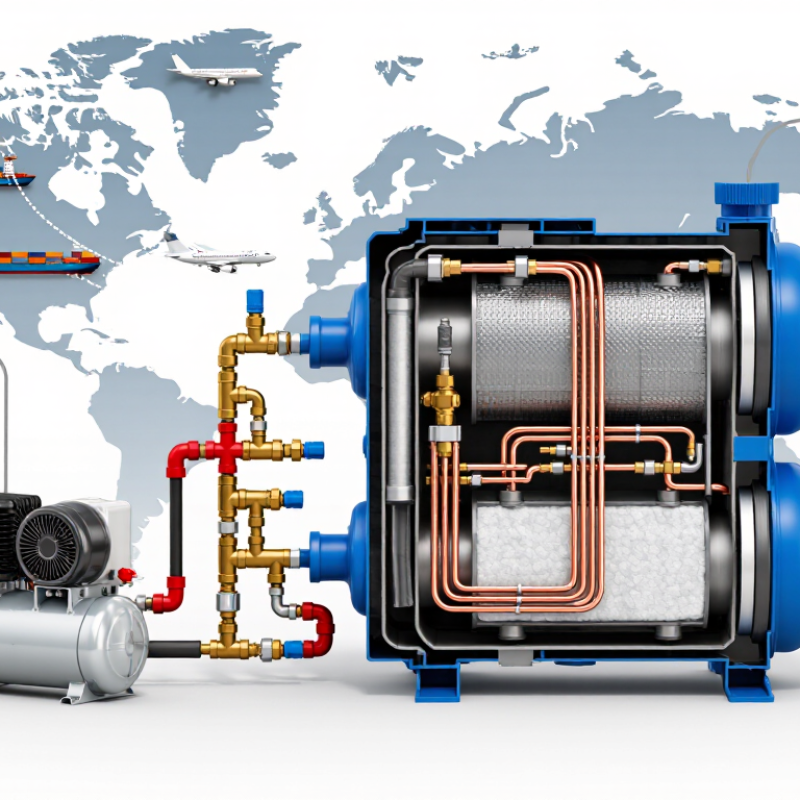
How to Choose an AC Filter Drier for Global Sourcing?

Define Filter-Drier Functions Using AHRI 710 Performance Ratings

Choosing an AC filter drier for global sourcing requires more than matching a connection size. The AHRI 710 performance rating gives engineers a practical comparison point. Check rated flow capacity, pressure drop, moisture capacity, and acid capacity under stated test conditions. These values help define what the component can handle in a real liquid line. A drier with low pressure drop may protect system efficiency, while adequate moisture capacity supports longer service life.

Compare ratings using the same refrigerant, temperature, and flow basis. Otherwise, the numbers can mislead. A model rated for one refrigerant may not deliver equal performance with another. Also verify maximum working pressure, inlet and outlet size, shell orientation, and installation instructions. In field reviews, oversized driers are often selected for comfort. That choice is not always better. Excess volume can increase cost and complicate replacement planning.

Tips: Request the complete AHRI 710 rating sheet, not only a catalog headline. Match the rating to the system’s actual mass flow. Inspect pressure drop at expected operating conditions. Confirm moisture and acid capacity for the refrigerant and oil combination. Ask for lot traceability and test records. Certification alone does not prove suitability. It only supports the decision. A careful sourcing review may reveal gaps, and that is useful.

Match Refrigerant and Oil Compatibility with ASHRAE 34 Classifications

How to Choose an AC Filter Drier for Global Sourcing?

When sourcing an AC filter drier, begin with the refrigerant’s ASHRAE 34 safety classification. Classes such as A1, A2L, A2, A3, and B2L indicate toxicity and flammability levels. They do not confirm drier compatibility by themselves. Treat the classification as a safety screen, not a complete selection method.

Check the refrigerant, oil type, operating pressure, and expected temperature range together. A drier suitable for one refrigerant may react poorly with another oil or additive. Polyolester oil can absorb moisture quickly during installation. Keep connections sealed, and choose a desiccant approved for the specific refrigerant and oil combination. For A2L and other flammable refrigerants, verify component approvals, leak-control requirements, and installation procedures before purchasing.

Documentation matters in global sourcing. Request pressure ratings, desiccant data, material compatibility reports, and clear classification references. Confirm that the supplier’s test conditions match your system design. A neat checklist can still fail. Product names, regional codes, and translated documents sometimes hide important differences. Ask technical questions in writing, then compare the answers with recognized safety standards and local requirements. In practice, the cheapest drier is rarely the lowest-cost choice after moisture damage, pressure loss, or replacement labor appears.

Size Moisture Capacity Against System Charge and Manufacturer Test Data

Selecting an AC filter drier for global sourcing starts with moisture capacity, not shell diameter. The correct choice depends on system charge, refrigerant type, piping volume, and service conditions. A small residential circuit may carry 1.5 kilograms of refrigerant, while a commercial rack can hold much more. That difference changes the drier’s workload. During commissioning, I compare the specified moisture capacity with the manufacturer’s test data. The test result should state the method, refrigerant, temperature, and final moisture level.

Do not treat catalog capacity as a universal promise. A published value may use a controlled laboratory charge, while your system faces repeated opening, vacuum loss, or humid storage. Match the rated capacity against the actual charge, then apply a practical safety margin. For example, a 2-kilogram charge should not automatically receive a drier tested only at that exact load. Check pressure drop too. An oversized core can add cost and restrict oil or refrigerant flow. An undersized core may saturate earlier, especially after poor evacuation.

For international purchasing, request complete test sheets before approving an equivalent part. Confirm connection size, flow direction, working pressure, compatible refrigerants, and storage packaging. Ask whether capacity is measured for new or regenerated desiccant. That detail matters. I have seen selections based on diameter alone; they looked correct but offered weak moisture protection. My selection process is not perfect. Field humidity, uncertain charge records, and supplier substitutions can expose hidden assumptions. Record those risks, review them with the manufacturer, and revise the selection when test evidence changes.

How to Choose an AC Filter Drier for Global Sourcing? - Size Moisture Capacity Against System Charge and Manufacturer Test Data
Screening reference only: the moisture-capacity figures are minimum procurement targets for comparing otherwise compatible products. Final selection must use the supplier's certified test data at a stated test temperature, refrigerant, oil, flow rate, and pressure-drop condition.
Refrigerant Refrigerant Type Common Oil Family Typical System Charge Band Minimum Verified Water Capacity for Initial Screening Preferred Test Reference Key Sourcing Checks
Charge-Based Moisture-Capacity Screening Matrix
R-134a HFC single-component refrigerant POE or approved AB oil 0.5–5 kg ≥ 1.0 g H2O Liquid-line filter-drier capacity test using R-134a and the specified oil Confirm compatibility with POE/AB oil, connection size, rated working pressure, and pressure drop at the design mass flow.
R-410A High-pressure HFC blend POE oil 1–10 kg ≥ 1.5 g H2O Liquid-line test with R-410A at the supplier's declared flow and temperature Use a pressure rating suitable for R-410A service; verify blend compatibility, burst-pressure documentation, and low pressure drop.
R-32 High-pressure HFC single-component refrigerant POE oil 0.5–8 kg ≥ 1.5 g H2O Liquid-line test with R-32 at the intended operating temperature Check high-side pressure capability, flammability-related installation requirements, oil compatibility, and electrical or brazing safety requirements.
R-404A HFC blend used mainly in commercial refrigeration POE oil 1–15 kg ≥ 2.5 g H2O Liquid-line test using R-404A with the specified POE oil Verify blend compatibility, low-temperature capacity, pressure drop, corrosion resistance, and regional restrictions on high-GWP refrigerants.
R-290 Hydrocarbon refrigerant; highly flammable POE or other oil specifically approved for the system 0.1–2 kg ≥ 0.5 g H2O Liquid-line test with R-290 and documentation for the intended equipment category Confirm component suitability for flammable refrigerant, maximum charge limits, sealed-system requirements, pressure rating, and applicable safety certification.
R-600a Hydrocarbon refrigerant; highly flammable Mineral oil or approved synthetic oil, depending on system design 0.05–0.5 kg ≥ 0.2 g H2O Liquid-line test with R-600a and the system's specified oil Verify very-low-charge application suitability, flammable-refrigerant compliance, internal volume, pressure rating, and moisture indicator compatibility.
Manufacturer Data Required Before Purchase Approval
Moisture-capacity result Request the measured water capacity in grams or milligrams, not only a product-size label. The result should identify the refrigerant, oil, test temperature, inlet moisture level, flow rate, and endpoint criteria.
System-charge relationship Use total refrigerant charge as an initial screening dimension, but do not size the drier from charge alone. Long pipe runs, repeated service exposure, POE oil, high ambient humidity, and evacuation quality can require additional moisture margin.
Flow and pressure drop Compare pressure drop at the actual design mass flow and liquid temperature. A drier with adequate moisture capacity may still be unsuitable if it causes excessive liquid-line pressure loss or flash gas at the expansion device inlet.
Mechanical and regulatory fit Confirm connection type, tube size, maximum working pressure, burst pressure, temperature range, corrosion resistance, refrigerant compatibility, oil compatibility, and applicable regional standards before global sourcing.
Recommended test documentation Ask for a product datasheet, lot or batch traceability, moisture-capacity test report, flow-capacity and pressure-drop curves, pressure-test records, material information, and compliance documents relevant to the destination market.

Check Flow Capacity and Pressure Drop at Design Operating Conditions

How to Choose an AC Filter Drier for Global Sourcing?

A filter drier should match the system’s real operating conditions, not only its connection size. Check flow capacity at the design refrigerant mass flow, evaporating temperature, and condensing temperature. A unit may appear suitable at one rating point but restrict flow during hotter weather. Measure the pressure drop across the drier in both normal and expected peak conditions. Excessive pressure loss can reduce system efficiency and raise compressor workload.

During sourcing, request certified performance data with clear test conditions. Compare pressure drop in kilopascals or psi, and confirm the refrigerant and oil compatibility. A practical review should also consider moisture capacity, dirt-holding capacity, installation direction, and replacement availability. I have seen projects focus heavily on purchase price, then discover that a small pressure drop became costly across thousands of operating hours. That mistake is easy to repeat.

Tips: Use the design operating point, not a catalogue headline. Leave reasonable capacity margin, but avoid excessive oversizing. A very large drier may perform poorly at low flow. Ask suppliers for data at your actual mass flow rate. If the information is incomplete, pause the selection. It may slow procurement briefly, but guessing can create longer delays. Recheck the choice after prototype testing, because field conditions rarely match the spreadsheet perfectly.

How to Choose an AC Filter Drier for Global Sourcing?

Check flow capacity and pressure drop at design operating conditions

The chart compares representative HVAC design points for R410A liquid-line applications. Select a filter drier with a rated flow capacity above the calculated design flow while keeping pressure drop low enough to avoid excessive liquid-line pressure loss. Actual selection should be verified against the supplier’s published capacity tables, refrigerant, temperature, and allowable pressure-drop limits.

Verify Pressure Ratings and Compliance with EN 378 and ISO 5149

Global sourcing of an AC filter drier should begin with pressure safety, not price. The component’s maximum allowable pressure must meet or exceed the system’s design pressure, including startup, defrost, and ambient-temperature conditions. EN 378 and ISO 5149 provide frameworks for safe refrigerating-system design, pressure protection, installation, and servicing. However, compliance is not automatic. Requirements may vary with refrigerant type, charge size, and national adoption.

The International Energy Agency’s The Future of Cooling report projects global air-conditioner stock could rise from 1.6 billion units to 5.6 billion by 2050. That growth increases the need for dependable moisture and acid control. Request pressure-test records, material specifications, operating-temperature limits, and traceability documents. Check whether the stated rating applies to both liquid and suction applications. A catalogue value alone is weak evidence. I have seen sourcing files that looked complete but lacked test conditions.

Tips: Compare the drier’s pressure rating with the complete system design pressure. Confirm the current editions of EN 378 and ISO 5149. Ask for declarations, laboratory reports, and batch identification. Review local conformity rules before shipment. Do not assume one certificate covers every market. That assumption can fail.