Leave Your Message

Top Refrigerant Filter Drier Manufacturers and Suppliers?

Choosing the top Refrigerant Filter Drier manufacturers and suppliers requires more than comparing catalog prices. A drier may look identical on a specification sheet, yet its desiccant blend, shell strength, filtration capacity, and sealing quality can differ significantly. In a cold room, supermarket rack, or heat pump, these details influence moisture control, acid removal, pressure drop, and compressor protection. Small component. Major consequences.

John Tomczyk, a respected refrigeration educator and author, has described filter-driers as “the kidneys of the refrigeration system.” This practical comparison explains their role clearly. They capture contaminants and help maintain refrigerant cleanliness, especially after compressor burnout, installation errors, or system opening. However, the analogy is not perfect. A filter-drier cannot repair poor evacuation or careless brazing.

This guide examines leading manufacturers and reliable suppliers through an experience-based lens. It considers product range, compatibility with refrigerants, connection options, pressure ratings, desiccant technology, documentation, and technical support. Brands such as Danfoss, Emerson, Parker Sporlan, Castel, and Sanhua are frequently considered by contractors and equipment builders, though regional availability varies. No ranking remains correct forever. Product revisions, supply conditions, and certification requirements can change the decision.

The strongest supplier is not always the cheapest. It should provide traceable specifications, genuine products, responsive engineering assistance, and clear installation guidance. Buyers should also verify capacity against the system’s refrigerant, tonnage, moisture risk, and operating temperature. A slightly overlooked detail can become an expensive service call. This comparison aims to make that choice more practical, transparent, and technically defensible.
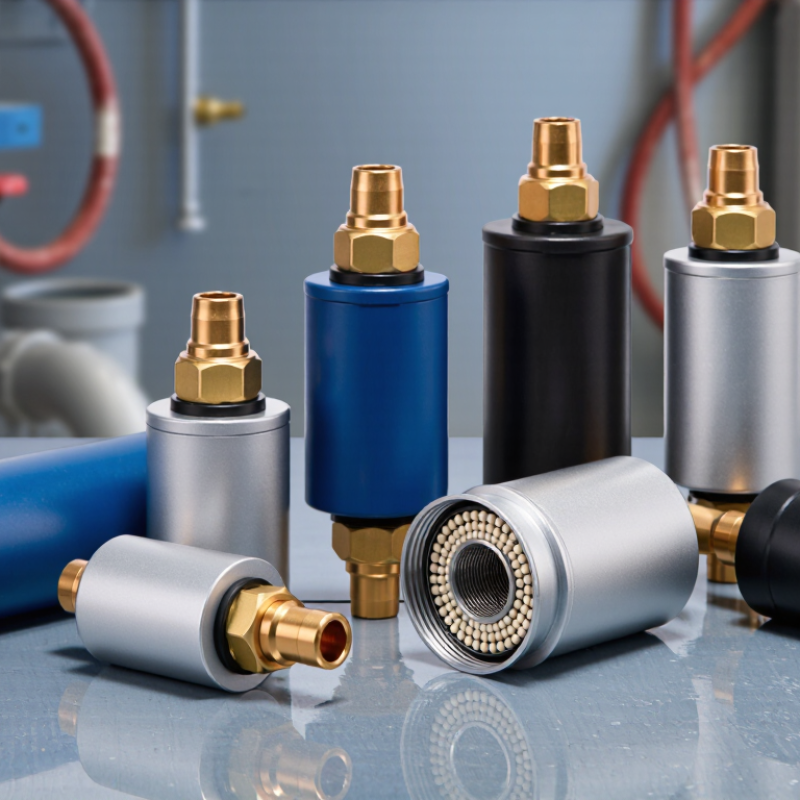
Top Refrigerant Filter Drier Manufacturers and Suppliers?

Refrigerant Filter Drier Basics: Desiccant Types and 20–40 μm Filtration

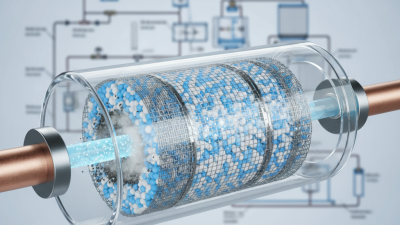
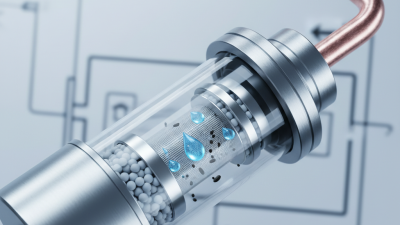
Refrigerant filter driers protect compressors from moisture, acids, debris, and wax. Their core material is usually molecular sieve, activated alumina, or a blended desiccant. Molecular sieve removes water efficiently, even at low concentrations. Activated alumina provides stronger acid adsorption. Blended cores can balance both functions, but the balance is not always obvious.

ASHRAE Handbook—Refrigeration (2022) emphasizes moisture control as a key reliability factor in sealed systems. AHRI Standard 710 also evaluates filter-drier performance, including water capacity, acid capacity, and particle removal. Many commercial designs target filtration around 20–40 μm. That range can catch damaging particles without creating excessive pressure loss. However, the actual result depends on flow rate, refrigerant type, oil condition, and core construction. A smaller rating does not automatically mean better protection. I have seen selection mistakes caused by reading only the micron number.

Tips: Match the drier to the refrigerant and oil. Check pressure drop at the expected operating load. Confirm the stated 20–40 μm rating uses a recognized test method. Replace the drier after major compressor burnout or prolonged system exposure. A sight glass may look normal while moisture remains inside. This is an imperfect check. Keep questioning it.

UNEP’s 2022 Technology and Economic Assessment Report highlights continuing refrigerant transitions under global environmental agreements. New refrigerant blends may require different materials, pressure ratings, and desiccant compatibility. Suppliers should provide capacity data, temperature limits, and installation guidance. Procurement teams should request test reports, not only catalog claims.
Key Selection Metrics: Water Capacity, Pressure Drop, and AHRI 711 Ratings

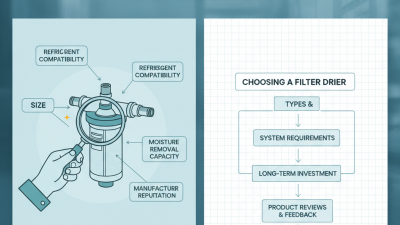
Choosing a refrigerant filter drier requires more than comparing connection sizes. AHRI Standard 711-2022 evaluates liquid-line filter-driers under defined refrigerant, temperature, and flow conditions. Its water-capacity ratings are commonly reported in drops of moisture. This gives suppliers a comparable test basis. A larger water-capacity number is useful, but it does not automatically suit every system.

Pressure drop deserves equal attention. ASHRAE Handbook—Refrigeration, 2022, links excessive liquid-line resistance with reduced system efficiency and possible capacity loss. Compare pressure drop at the system’s actual refrigerant mass flow, not only at a catalog headline value. A drier rated at 0.5 psi drop may perform differently during startup, low ambient operation, or partial load. Small details matter.

AHRI 711 ratings also help screen manufacturers and suppliers. Check the tested refrigerant, flow condition, water-capacity value, and stated pressure-drop point. Do not accept “high capacity” without test conditions. That claim is incomplete. Field experience suggests oversizing can improve moisture tolerance, yet it may increase cost and installation space. I would also verify compatibility with oil type, refrigerant, temperature range, and service procedure. This step is often skipped. That is a mistake worth admitting. Reliable suppliers should provide traceable test data, installation guidance, and replacement recommendations based on measured operating conditions, not vague tonnage estimates.

Top Refrigerant Filter Drier Manufacturers and Suppliers? - Key Selection Metrics: Water Capacity, Pressure Drop, and AHRI 711 Ratings
Filter-Drier Category Typical Installation Common Connection Size Typical Water Capacity
(AHRI 711 Test Method)
Typical Initial Pressure Drop
(Clean, Rated Flow)
AHRI 711 Rating Status Selection and Verification Criteria
Compact liquid-line drier Small residential and light-commercial air-conditioning systems 1/4 to 3/8 in. ODF Approximately 20–60 water drops, depending on shell size and desiccant charge Approximately 0.03–0.10 bar at rated liquid flow Rated or tested to AHRI 711 Confirm refrigerant compatibility, bidirectional-flow suitability, maximum working pressure, and the manufacturer’s stated flow rate.
Standard liquid-line drier Residential heat pumps and commercial comfort-cooling systems 3/8 to 5/8 in. ODF Approximately 50–150 water drops under the AHRI 711 test conditions Approximately 0.04–0.15 bar at rated liquid flow Preferred: published AHRI 711 data Compare water capacity at the same test temperature and refrigerant condition; do not compare unsupported catalog values directly.
High-capacity molded drier Commercial refrigeration, condensing units, and medium-capacity systems 1/2 to 7/8 in. ODF Approximately 100–300 water drops, subject to core volume and formulation Approximately 0.05–0.20 bar at rated liquid flow Published AHRI 711 performance recommended Select for adequate moisture capacity after evacuation, while keeping pressure drop low enough to avoid liquid-line flashing.
Replaceable-core shell Large commercial and industrial refrigeration systems 7/8 to 2-1/8 in. ODF or threaded connections Capacity is determined by the installed core; published values commonly exceed 300 water drops Approximately 0.02–0.12 bar with a clean, correctly sized core Shell and core data may be rated separately Check shell pressure rating, core compatibility, bypass arrangement, service access, and pressure-drop data for the exact core combination.
Bi-directional heat-pump drier Reversible heat pumps and systems with frequent flow reversal 3/8 to 7/8 in. ODF Approximately 50–200 water drops, depending on the internal check-valve and core design Approximately 0.05–0.25 bar in each flow direction Require two-direction performance data Verify equal performance in heating and cooling modes, reversal durability, refrigerant compatibility, and allowable pressure drop in both directions.
High-pressure refrigerant drier Systems using higher-pressure refrigerants or transcritical operation 1/4 to 1-1/8 in. ODF, depending on system design Published water-capacity data must be checked for the exact refrigerant and test condition Approximately 0.05–0.30 bar at the specified rated flow AHRI 711 data must be specifically confirmed Prioritize maximum working pressure, burst pressure, temperature limits, refrigerant approval, and pressure drop at the actual operating mass flow.
Acid-removal cleanup drier Post-burnout service, compressor replacement, or contaminated circuits 3/8 to 1-1/8 in. ODF Often lower or not directly comparable to standard liquid-line driers because the media targets acid and contaminant removal Approximately 0.10–0.40 bar when clean; rises as contaminants load the media Use AHRI 711 data where provided Evaluate acid-removal capability, maximum recommended operating time, pressure-drop increase, and required replacement interval.
Technical note: AHRI Standard 711 is a performance-rating method for liquid-line filter-driers. Water capacity and pressure-drop values vary with refrigerant, liquid temperature, flow rate, desiccant formulation, connection size, and test configuration. The ranges above are engineering selection benchmarks rather than a substitute for the exact product data sheet. For procurement, compare products using the same AHRI 711 test basis and verify the rated flow, maximum working pressure, refrigerant compatibility, and installation direction.

Leading Manufacturers: Parker, Emerson, Danfoss, Sporlan, and Castel

Refrigerant filter drier manufacturers serve a critical role in protecting compressors and expansion devices. Leading suppliers typically offer products for residential, commercial, and industrial refrigeration systems. Their designs commonly use molecular sieve materials to capture moisture, acids, and solid contaminants. Some models include activated carbon for added chemical control. Small details matter here.

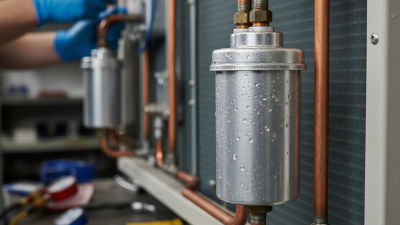
Experienced technicians usually check the refrigerant type, system capacity, connection size, and maximum working pressure before selection. A drier with excessive pressure drop can reduce system efficiency. An undersized model may saturate quickly after a compressor replacement. Copper connections should remain clean and dry during brazing. Even a tiny amount of moisture can create trouble later.

Reliable manufacturers publish capacity ratings, temperature limits, flow data, and installation guidance. Strong suppliers also provide batch traceability and consistent core quality. These records help contractors investigate repeated failures instead of guessing. In the field, replacement intervals vary widely because contamination levels differ. A clean system may need little attention, while a burned compressor demands more careful filtration. No product is perfect. Selection errors still happen, especially when technicians rely on familiar dimensions alone. Comparing pressure drop and contaminant capacity would be wiser, though it takes extra time.

Common Refrigerant Filter-Drier Connection Sizes

Refrigerant filter driers are commonly available with copper-tube connections ranging from 1/4 inch to 7/8 inch. The chart shows the corresponding nominal outside diameters in millimeters. Actual availability depends on the product series, application, and regional standards.

Supplier Compliance: UL 207, ISO 5149, and Refrigerant Compatibility

Choosing a refrigerant filter drier manufacturer requires more than comparing price and drying capacity. Compliance should be checked before technical features. UL 207 may support safety evaluation for refrigeration components, but its scope and certification status must match the actual product. Ask for current certificates, test reports, and the certified model range.

ISO 5149 addresses safety and environmental considerations in refrigeration systems. A reliable supplier should explain how its filter drier supports system pressure, installation, and servicing requirements. Confirm the working pressure and temperature ratings. Check production records and lot traceability. These details matter when a component is installed in a cold room, heat pump, or commercial cabinet.

Refrigerant compatibility needs closer attention. Verify the refrigerant, lubricant, seal materials, and moisture-control media together. A drier suitable for one refrigerant may not perform safely with another. Ask for compatibility data under realistic operating conditions, not only laboratory summaries. Documentation can still be incomplete. That is worth questioning.

Tips: Request a sample certificate and compare its model number with the product label. Confirm the manufacturing date, pressure rating, and approved refrigerants. Keep installation instructions with the service record. A small paperwork gap can become a costly field problem.

Purchasing Criteria: Cooling Capacity, MOQ, Lead Time, and Warranty

Choosing a refrigerant filter drier requires more than comparing catalog prices. Cooling capacity must match the system’s load, refrigerant, connection size, and acceptable pressure drop. ASHRAE Handbook—Refrigeration stresses moisture and contaminant control as essential to reliable compressor operation. A drier rated only by pipe diameter may be the wrong choice.

Check capacity tables carefully.

Supplier data should show performance under stated temperatures and refrigerant conditions. The International Energy Agency reports that global space-cooling energy demand could more than triple by 2050 from 2016 levels. This growth increases pressure on component availability and technical support. Ask suppliers for test methods, pressure-drop values, and compatibility documents, not vague “universal” claims.

MOQ and lead time affect cash flow. A low MOQ suits repair distributors, while larger projects may justify scheduled production orders. Confirm whether quoted lead time includes testing, labeling, and export preparation. Request a written stock position.

Warranty terms should define coverage, inspection steps, replacement timing, and exclusions caused by installation errors. A twelve-month warranty sounds useful, but only if the claims process is practical.

I would not accept a warranty without asking who pays freight and how evidence is verified. Inconsistent documentation remains a common purchasing weakness, even with technically capable suppliers.