Top Drier Filter Options for Efficient Moisture Control in HVAC Systems?
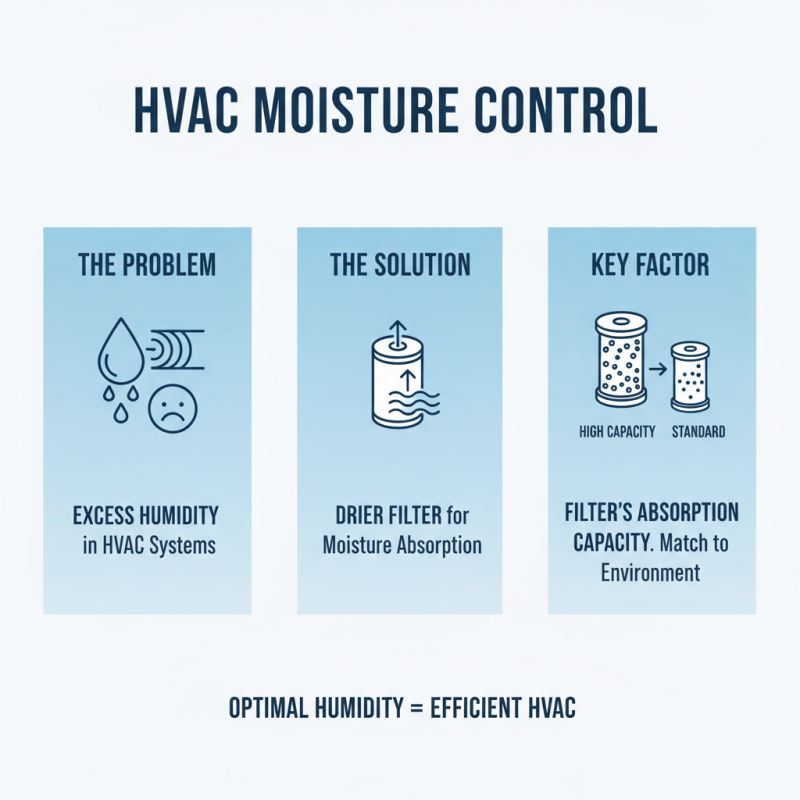
Effective moisture control is vital for HVAC systems. A key component in achieving this is the Drier Filter. Selecting the right Drier Filter can significantly enhance system efficiency and durability.
Drier Filters remove excess moisture and contaminants from refrigerants. This is crucial for maintaining optimal performance. Without proper filtration, systems can suffer from corrosion and reduced lifespan. Some Drier Filters work better in specific applications.
Considerations like operational environment and maintenance frequency are essential. The wrong choice may lead to unexpected failures. Therefore, assessing options carefully is important. This guide explores top Drier Filter options to improve moisture control. It aims to highlight the importance of selection for efficient HVAC operation.
Types of Drier Filters Commonly Used in HVAC Systems
In HVAC systems, drier filters play a crucial role in moisture control. These filters help prevent moisture from damaging the system. They also maintain optimal performance and efficiency. Selection of the right filter can significantly impact the system's lifespan.
Common types of drier filters include desiccant filters, which absorb moisture effectively. They utilize materials that capture water vapor, ensuring dry air circulates. Another type is the suction line filter drier, which is placed in the suction line. It removes debris and moisture, protecting the compressor from damage. While they are quite effective, filters need regular checks. Neglecting maintenance can lead to clogs.
In addition to these, there are liquid line filter driers. They serve to filter refrigerant before it reaches critical components. However, using the wrong size can hinder airflow, which is problematic. Choosing the correct drier filter improves energy efficiency. It's essential to consider specific application needs to avoid unnecessary issues.
Top Drier Filter Options for Efficient Moisture Control in HVAC Systems
| Filter Type |
Efficiency (%) |
Application |
Maintenance Frequency |
Cost Range ($) |
| Refrigerant Drier |
95 |
Refrigeration Systems |
Annually |
50-150 |
| Desiccant Drier |
98 |
Compressed Air Systems |
Every 6 Months |
100-300 |
| Activated Carbon Filter |
90 |
Indoor Air Quality |
Every 3 Months |
30-100 |
| Bag Filter |
85 |
Industrial Applications |
Every Year |
75-250 |
| Coalescing Filter |
99 |
Hydraulic Systems |
Every 2 Years |
150-400 |
Advantages of Using Desiccant versus Mechanical Filters
When it comes to moisture control in HVAC systems, the choice between
desiccant filters and
mechanical filters is significant.
Desiccant filters excel in environments with high humidity. They absorb moisture efficiently, maintaining ideal indoor air quality. Their ability to function effectively in low temperatures is a key advantage.
On the other hand, mechanical filters trap particles like dust and pollen. They do not affect humidity levels directly.
Tip: Consider your environment. If humidity is consistently high, desiccants might be the best option. Mechanical filters are suitable for general air quality improvement.
It's important to evaluate both options critically. Desiccant filters can be expensive and require frequent replacements. In some cases, how effectively they remove moisture can vary. Mechanical filters may need regular changes to maintain efficiency. They are more cost-effective but may not adequately manage humidity.
Tip: Regular maintenance of filters ensures optimal performance. Check humidity levels periodically to determine the best solution for your space. A balance between cost and efficiency is crucial.
Maintenance Practices for Optimal Drier Filter Performance
Drier filters play a crucial role in HVAC systems by controlling moisture levels. Regular maintenance ensures these filters perform at their best. A report by the American Society of Heating, Refrigerating and Air-Conditioning Engineers (ASHRAE) states that effective moisture control can improve energy efficiency by up to 30%. This highlights the importance of keeping drier filters in top shape.
One simple maintenance practice is to check filters regularly. Filters should be inspected every month, especially during peak seasons. Many HVAC professionals recommend changing them at least twice a year. Failure to do so can lead to reduced airflow and system strain. Contaminated filters can decrease efficiency, which is not ideal.
Cleaning the filter drainage pan is another important task. This area can gather debris and mold. Neglecting it can lead to water pooling, causing damage. Some reports indicate that this issue can increase repair costs by 20%. Regular cleaning helps maintain system reliability. Always document maintenance tasks for better tracking. A detailed maintenance history helps identify patterns and areas needing improvement.
Emerging Technologies in Drier Filters for HVAC Applications
Moisture control in HVAC systems is vital. Emerging technologies in drier filters are changing the game. These filters use advanced materials for optimal moisture absorption. They can enhance air quality in commercial and residential settings. New designs focus on efficiency and durability. This can lead to better energy savings.
Tips: Regularly check your drier filter. This ensures it’s functioning optimally. Clean or replace filters as needed.
Innovative approaches include intelligent filters that monitor humidity levels. These systems adjust automatically, improving comfort. Combining traditional materials with smart technology shows promise. This fusion could lead to breakthroughs in moisture management.
Tips: Consider investing in smart sensors. They can help maintain ideal conditions. Make sure to evaluate your current setup. Adjustments may be necessary for better performance.