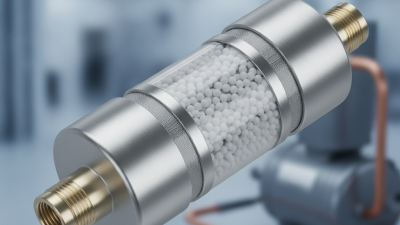
Top Filter Drier Core Manufacturers and Suppliers
Choosing the right Filter Drier Core manufacturer or supplier can influence system cleanliness, moisture control, and long-term refrigeration performance. A reliable core helps capture acids, particles, and residual moisture before they damage sensitive components. In practical service work, technicians often notice the difference through clearer sight glasses, fewer blocked valves, and steadier operating pressures.
This guide examines leading Filter Drier Core manufacturers and suppliers from a professional purchasing perspective. It considers material quality, filtration capacity, compatibility, production consistency, certifications, and technical support. Suppliers with documented testing procedures deserve closer attention. So does transparent product information. A strong manufacturer should explain core composition, pressure limits, recommended applications, and replacement intervals without vague claims.
Field experience still matters.
Laboratory specifications do not always reflect installation conditions. A core may perform well in a clean test system but respond differently when moisture levels, oil types, or refrigerant conditions change. That is why experienced buyers compare technical data with service feedback and verified customer results. Price also requires careful judgment. The cheapest option may create higher maintenance costs, while the most expensive product may offer little practical advantage.
No supplier is perfect. Even reputable companies can have inconsistent communication or limited regional stock. This overview encourages a balanced review of product reliability, supplier expertise, delivery capability, and after-sales support. The goal is not to promote one brand blindly, but to help engineers, distributors, and maintenance teams make informed, defensible decisions.
Filter Drier Cores: Definition, Purpose, and Operating Principles
Filter drier cores are replaceable filtration elements used inside refrigeration and air-conditioning filter driers. They remove moisture, acid, sludge, and fine particles from the refrigerant circuit. A quality core protects compressors, expansion devices, and valves from contamination.
The operating principle is simple but critical. Refrigerant flows through the core as the system runs. Desiccant material captures water through adsorption, while filtering media trap solid debris. Some cores also help neutralize acids formed after compressor burnout. In field inspections, technicians often find that a saturated core looks normal from outside. Performance can still be poor. Pressure drop, outlet temperature, and moisture indicators provide better evidence.
When evaluating manufacturers and suppliers, check desiccant capacity, filtration efficiency, pressure rating, compatibility, and documented testing. A core designed for one refrigerant or oil may not suit another application. That detail is easy to overlook. Supplier traceability and clear installation guidance also support reliable service.
Tips: Replace the core after major contamination or compressor failure. Keep replacement cores sealed until installation. Confirm flow direction and use clean tools. Measure pressure drop before and after servicing. My practical preference is careful verification over assumptions; even a small mismatch can reduce system efficiency.
Top Filter Drier Core Manufacturers and Suppliers - Filter Drier Cores: Definition, Purpose, and Operating Principles
| Core Type |
Primary Function |
Typical Active Materials |
Contaminants Controlled |
Common Refrigerant Applications |
Key Selection Considerations |
| Molecular Sieve Core |
Removes dissolved moisture through selective adsorption. |
Synthetic zeolite, commonly 3A or 4A molecular sieve. |
Water and trace moisture. |
Many HFC, HFO, HCFC, and blended refrigerant systems, subject to manufacturer compatibility data. |
Required moisture capacity, refrigerant compatibility, operating temperature, and pressure drop. |
| Activated Alumina Core |
Adsorbs moisture and can help retain certain acidic compounds. |
Porous activated aluminum oxide. |
Moisture, selected acids, and polar contaminants. |
Refrigeration and air-conditioning circuits where acid and moisture control are required. |
Acid-removal requirement, adsorption capacity, compatibility with oil and refrigerant, and allowable pressure loss. |
| Activated Carbon Core |
Adsorbs oil decomposition products, odors, and selected organic contaminants. |
High-surface-area activated carbon. |
Organic residues, oil contaminants, and some odor-causing compounds. |
Cleanup and burn-out applications when contamination levels are elevated. |
Temporary or permanent use, contaminant load, oil compatibility, and replacement interval. |
| Combination Core |
Provides simultaneous moisture adsorption, acid removal, and particulate filtration. |
Blended or layered molecular sieve, activated alumina, and filtration media. |
Moisture, acids, waxes, sludge, and solid particles. |
General service systems and systems exposed to moisture or chemical contamination. |
Balance between capacity, filtration efficiency, flow resistance, and refrigerant/oil compatibility. |
| Solid Acid-Removal Core |
Neutralizes or adsorbs acids generated by compressor overheating or motor burnout. |
High-activity alumina and other acid-control media. |
Organic acids, inorganic acids, varnish, and decomposition by-products. |
Post-burnout cleanup and systems with confirmed acid contamination. |
Acid test results, contamination severity, pressure drop, and mandatory post-cleanup replacement. |
Filter Drier Core Operating Principles and Technical Data
| Performance Dimension |
How It Works |
Typical Engineering Guidance |
Why It Matters |
| Moisture Adsorption |
Water molecules adhere to the internal surfaces and pores of hygroscopic media. |
Choose a core with sufficient static and dynamic water capacity for the system charge and expected contamination. |
Moisture can promote corrosion, copper plating, ice formation, and chemical instability. |
| Acid Control |
Basic or porous media adsorb, neutralize, or retain acidic decomposition products. |
Use an acid-removal core only when system chemistry and the core’s compatibility are confirmed. |
Acids may damage motor windings, bearings, insulation, and metallic components. |
| Particle Filtration |
A porous outer structure and internal passages physically capture solid contaminants. |
Verify filtration efficiency, dirt-holding capacity, and resistance to media shedding. |
Particles can block expansion devices, damage compressors, and reduce heat-transfer performance. |
| Pressure Drop |
Refrigerant loses pressure as it flows through the core’s pores and filtration structure. |
Select the core according to mass flow, refrigerant state, temperature, and allowable system pressure loss. |
Excessive pressure drop can reduce capacity and increase compressor operating costs. |
| Refrigerant and Oil Compatibility |
The core remains chemically and mechanically stable in contact with the selected refrigerant and lubricant. |
Confirm compatibility with the specific refrigerant blend, lubricant type, temperature range, and pressure rating. |
Incompatible materials may deteriorate, release particles, or lose adsorption performance. |
| Flow Direction |
The core is designed to expose the refrigerant to the filtration and adsorption media in the intended direction. |
Follow the housing arrow and installation instructions; reversible-flow designs require explicit approval. |
Incorrect flow can reduce filtration effectiveness and increase the risk of core damage. |
Note: Actual capacity, pressure drop, temperature limits, and compatibility depend on the core formulation, housing design, refrigerant, lubricant, and operating conditions. Always verify the applicable technical datasheet and system requirements before selection.
Core Types, Materials, and Performance Characteristics
Top Filter Drier Core Manufacturers and Suppliers
Core types determine how a filter drier handles moisture, acids, particles, and wax. Molded solid cores usually provide predictable filtration and stable pressure drop. Replaceable cores suit larger systems and repeated maintenance. Molecular sieve cores absorb water efficiently. Activated alumina helps remove acids after compressor burnout. Carbon-based materials can capture wax and certain organic contaminants, but they need careful application.
Performance depends on more than moisture capacity. Engineers should compare water capacity, acid capacity, filtration rating, flow resistance, and refrigerant compatibility. AHRI Standard 711 provides recognized methods for rating liquid-line filter-driers under defined test conditions. Those conditions matter. A catalog value without refrigerant, temperature, or flow details can mislead. The International Energy Agency’s The Future of Cooling report projects that cooling electricity demand could more than triple by 2050. Cleaner, better-protected circuits will therefore matter more as equipment duty increases. I still find selection errors during retrofits. The “largest” core is not always the best choice.
Tips: Match the core to the failure risk. Use molecular sieve for moisture control and activated alumina for acid cleanup. Check pressure drop at actual mass flow, not nominal pipe size. Confirm compatibility with the refrigerant and lubricant. Replace heavily contaminated cores after the system reaches stable readings. Measure twice. Cite AHRI Standard 711 and the IEA cooling report when documenting technical decisions.
Top Filter Drier Core Manufacturers and Suppliers: Core Types, Materials, and Performance Characteristics
Molecular-sieve desiccants are widely used in refrigeration filter drier cores because their controlled pore openings selectively adsorb water while limiting the passage of larger molecules.
The chart shows the nominal pore aperture of common molecular-sieve materials: 3A, 4A, and 5A correspond to approximately 3, 4, and 5 angstroms respectively. Actual filter drier performance also depends on core density, binder composition, refrigerant compatibility, pressure drop, and installation conditions.
Key Criteria for Selecting a Filter Drier Core
Top Filter Drier Core Manufacturers and Suppliers
Key Criteria for Selecting a Filter Drier Core
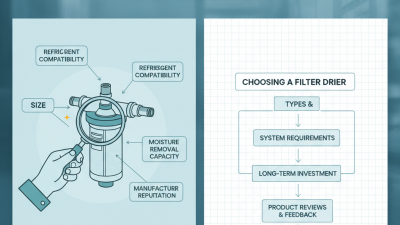
Choosing a filter drier core requires more than comparing prices. The core must match the refrigerant, oil type, operating pressure, and system capacity. A mismatch may increase pressure drop or restrict liquid flow. Check the manufacturer’s technical data before installation.
Filtration performance matters in real service conditions. A reliable core should capture metal particles, carbon residue, and moisture without releasing trapped debris. Desiccant selection is equally important. Molecular sieve materials suit moisture control, while activated carbon can help remove acids and oil contaminants. Ask for capacity data at the actual system temperature, not only at laboratory conditions.
Look for clear testing records, batch traceability, and sealed packaging. A damaged package can expose the desiccant before use. Inspect the core for cracks, dust, or unusual discoloration. Small details matter. Supplier support also deserves attention. Technical staff should explain compatibility, replacement intervals, pressure-drop limits, and storage requirements. Independent certifications can strengthen confidence, but certificates alone do not prove field performance.
A practical supplier should provide consistent dimensions and repeatable quality across batches. In maintenance work, installers often discover that a cheaper core creates extra labor later. That assumption is not always correct, but it deserves testing. Compare total service cost, not just purchase cost. When product data seems incomplete, delay the order and request written clarification. Reliable decisions need evidence.
How to Evaluate Filter Drier Core Manufacturers and Suppliers
Top Filter Drier Core Manufacturers and Suppliers
How to Evaluate Filter Drier Core Manufacturers and Suppliers
Choosing a filter drier core supplier requires more than comparing prices. Start with the core’s intended refrigerant, oil type, system temperature, and moisture load. A suitable supplier should explain these limits clearly, not hide them behind broad performance claims.
Ask for technical data on filtration efficiency, water capacity, pressure drop, and maximum working pressure. Check whether test conditions resemble your equipment. A low pressure drop matters in long refrigeration lines. So does stable performance after repeated temperature changes. Review material compatibility, core dimensions, seals, and connection details before ordering samples.
Documentation reveals manufacturing discipline. Look for batch numbers, inspection records, test reports, and a traceable quality process. Certifications can support confidence, but they should not replace technical evidence. Speak with an engineer who understands refrigeration applications. A sales-only response is a warning sign.
Request samples from different production batches. Compare weight, surface finish, fit, and pressure behavior. Small differences may expose weak process control. Ask how rejected cores are handled. The answer may be uncomfortable, but it matters.
A polished catalog proves little. Real reliability appears in consistent samples and honest limitations. Many buyers focus too heavily on unit cost. That is a mistake. An inexpensive core can create moisture problems, compressor wear, and expensive service calls. Still, supplier evaluation is never perfect; field conditions vary, and published data may not cover every installation. Keep test records and reassess performance after commissioning.
Leading Manufacturer and Supplier Profiles by Market Segment
Top Filter Drier Core Manufacturers and Suppliers
Filter drier core manufacturers serve distinct market segments, and their strengths often differ by application. Residential HVAC suppliers usually prioritize compact cores, stable moisture removal, and simple replacement. Their products fit common shell sizes and routine service schedules. A technician may value low pressure drop more than laboratory claims. This practical preference matters.
Commercial refrigeration manufacturers focus on supermarkets, restaurants, and refrigerated transport. They typically offer cores for repeated temperature changes, oil compatibility, and high contaminant capture. Look for published flow data, filtration ratings, and documented testing methods. Suppliers with application engineers can help match core capacity to compressor size and refrigerant circuit. Ask for traceable material records. Small details matter.
Industrial and cold-chain suppliers handle larger systems, longer operating cycles, and costly downtime. They may provide custom dimensions, corrosion-resistant materials, and batch inspection reports. OEM-focused manufacturers often support private specifications, sample approval, and controlled production changes. However, a polished profile does not prove field reliability. Check warranty terms, delivery history, and independent performance evidence. Some catalogs omit pressure-drop data. That deserves a question. A careful buyer should compare service response, not price alone. In real installations, a slightly cheaper core can create more labor, waste, and uncertain troubleshooting. Profiles should be judged against actual operating conditions, not impressive wording.