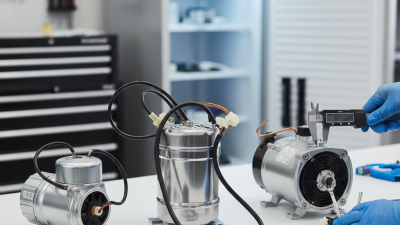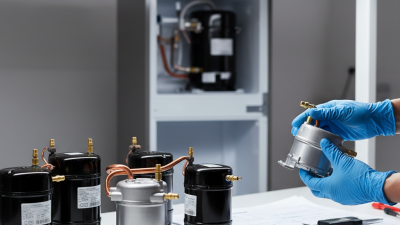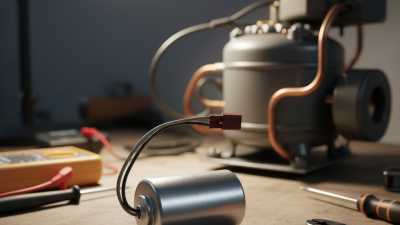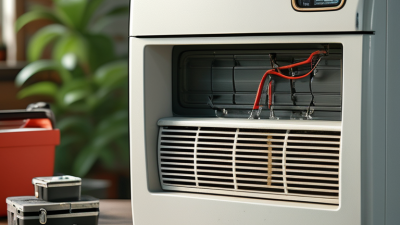
Choosing a replacement compressor for a freezer in 2026 is not simply a matter of matching horsepower. The decision affects temperature stability, energy use, food safety, and repair costs. A compressor may look suitable on the shelf, yet fail under the freezer’s actual load.
Refrigeration engineer and educator Dr. Michael J. Phelan offers a useful reminder: “The correct compressor is selected from operating conditions, not from appearance alone.” That principle should guide every Freezer Compressor Replacement project. Check the refrigerant type, voltage, frequency, displacement, cooling capacity, starting current, and oil compatibility. Also confirm the original compressor’s low-temperature application. A household freezer and a commercial display freezer can require very different components.
Measure carefully.
A dependable replacement begins with evidence. Record the model plate before removing anything. Photograph the wiring, tubing, and mounting points. Inspect the condenser, evaporator, filter-drier, relay, and overload protector. A new compressor cannot compensate for a blocked condenser or a weak start device.
Some choices remain less obvious. Manufacturer capacity charts may use different rating conditions. Online listings can also contain incomplete or conflicting data. This is where professional verification matters. Compare technical datasheets, not marketing labels. Ask whether the replacement supports the freezer’s ambient temperature and expected duty cycle.
This guide will examine compressor specifications, refrigerant compatibility, electrical requirements, installation risks, and long-term efficiency. It will also question a common assumption: the cheapest compressor is rarely the least expensive solution. In some cases, replacing the entire freezer may be more practical. That possibility deserves honest consideration.
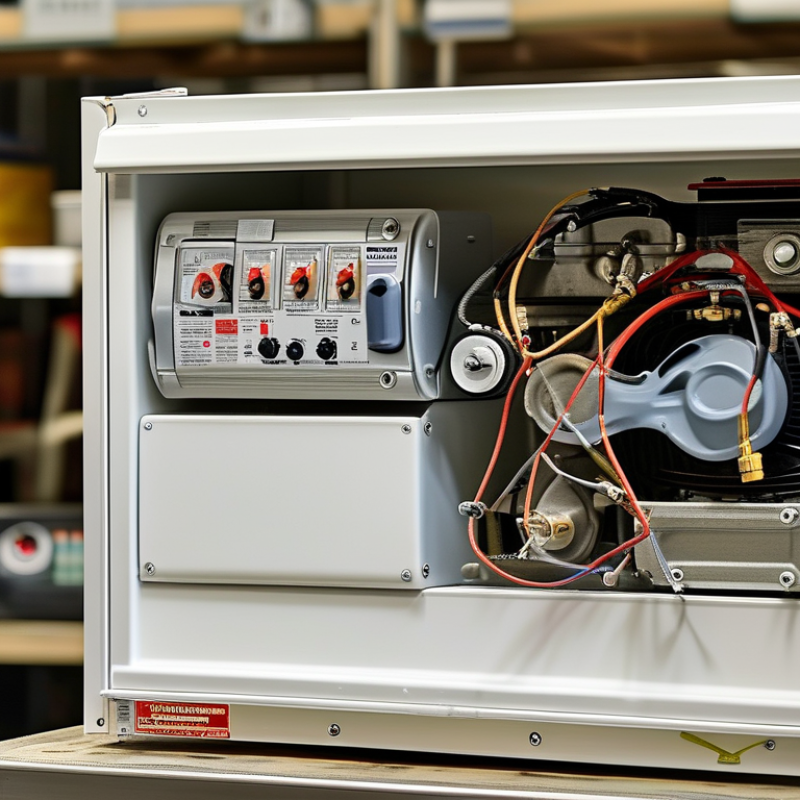
A freezer compressor is the system’s working heart. It draws low-pressure refrigerant vapor from the evaporator, compresses it, and sends hot, high-pressure vapor toward the condenser. This pressure change enables heat removal from the cabinet. The compressor does not create cold directly. It moves refrigerant through a controlled cycle.
Reciprocating compressors remain common in household freezers. A piston moves inside a cylinder, producing reliable compression and strong starting torque. Rotary compressors use a rolling mechanism and often suit compact appliances with limited space. Scroll compressors provide smooth, efficient operation, but they usually fit larger or specialized systems. Variable-speed compressors adjust their output as temperatures change. They can reduce noise and energy use, although their electronic controls require careful matching. Very quiet is not always better.
When choosing a replacement, match the refrigerant, voltage, frequency, displacement, cooling capacity, and mounting pattern. Check the original model’s service data, not only its horsepower rating. A compressor with the wrong starting characteristics may click repeatedly and overheat. In practical repairs, technicians also inspect the start device, overload protector, wiring, and filter-drier. Replacing only the compressor can leave contamination or moisture inside the circuit. That mistake is easy to make. Manufacturer specifications and qualified service procedures provide the safest reference. Even experienced repairers should pause when an old freezer has unclear labels, modified wiring, or signs of repeated electrical failure.
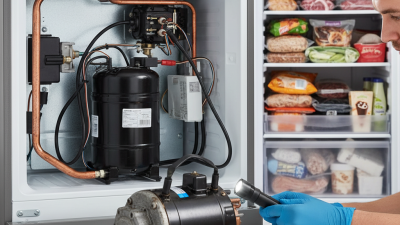
Choosing a freezer compressor replacement in 2026 starts with the freezer model, not the compressor price. Record the model number, serial number, refrigerant, voltage, frequency, and original compressor capacity. Check the nameplate inside the cabinet. The label is not always enough.
A compatible compressor must match the refrigerant and oil type. It must also suit the freezer’s cooling load and evaporating temperature. Confirm displacement, starting current, mounting points, tube sizes, and overload protection. A compressor with the wrong starting relay may hum, trip, or overheat. I have seen replacements run quietly but fail because the electrical terminals differed. That mistake is expensive.
The U.S. Department of Energy’s 2024 technical analysis uses a 24-hour energy test cycle for household refrigeration products. This shows why capacity alone cannot prove compatibility. ENERGY STAR’s 2024 refrigerator criteria target at least 10% lower energy use than the federal minimum for qualifying products. Efficiency depends on the complete system, including controls and airflow.
Also check the refrigerant’s future status. The U.S. Environmental Protection Agency’s 2024 Technology Transitions rule lists a 150 GWP limit for many new household refrigerators and freezers from 2027. The replacement should match approved refrigerant requirements, not just physical dimensions. When records are missing, a qualified refrigeration technician should measure operating pressures and electrical data before ordering. Guessing can work once. It can also hide damage.
When choosing a freezer compressor replacement in 2026, match capacity before horsepower. A compressor rated near the original cooling load prevents slow pull-down and excessive cycling. Check capacity in BTU/h at the freezer’s evaporating temperature, not only the electrical wattage. A small unit may run continuously beside a warm workshop wall.
Efficiency deserves equal attention. ENERGY STAR’s freezer criteria report that certified models use at least 10% less energy than the applicable federal minimum standard. However, compressor efficiency depends on the whole system. A dirty condenser, incorrect charge, or oversized compressor can erase that advantage. Measure running current, discharge temperature, and cabinet temperature after installation. The nameplate is useful, but field measurements tell the harder truth.
Refrigerant compatibility cannot be guessed. The IPCC Sixth Assessment Report lists R-134a with a global warming potential of about 1,530 and R-404A near 3,900 over 100 years. Lower-GWP options may reduce climate impact, but they require compatible oil, controls, seals, and approved service procedures. The U.S. EPA’s refrigerant transition guidance also emphasizes equipment-specific compatibility and safe handling. Do not simply replace an R-404A compressor with an R-290 model. That shortcut can create pressure, oil-return, and safety problems. I would recheck the original refrigerant, voltage, displacement, and starting device before ordering. Mistakes often begin with one missing label.
| Freezer Application | Typical Cooling Capacity (-23°C Evaporating / 32°C Condensing) |
Typical Electrical Input | Typical COP Range | Common Refrigerant Options | Approximate GWP100 | Replacement Considerations |
|---|---|---|---|---|---|---|
| Compact household freezer Approximately 50–150 L |
80–180 W | 60–130 W | 0.8–1.5 | R600a, R290 | R600a: about 0.006 R290: about 3.3 |
Match the original refrigerant, displacement, starting device, voltage, and oil type. Hydrocarbon refrigerants are flammable and require approved service procedures. |
| Full-size household freezer Approximately 150–400 L |
180–350 W | 120–250 W | 0.9–1.5 | R600a, R290, legacy R134a | R600a: about 0.006 R290: about 3.3 R134a: 1,430 |
A higher-capacity compressor is not automatically better; oversizing may increase cycling, noise, discharge temperature, and energy use. |
| Small commercial freezer Undercounter or compact upright |
350–800 W | 230–550 W | 0.8–1.5 | R290, R134a, R513A | R290: about 3.3 R134a: 1,430 R513A: about 573 |
Verify the required evaporating temperature, condenser airflow, refrigerant charge limit, and electrical protection before selecting the replacement. |
| Commercial reach-in freezer Approximately 500–1,400 L |
800–1,800 W | 550–1,250 W | 0.7–1.5 | R290, R513A, R134a in existing equipment | R290: about 3.3 R513A: about 573 R134a: 1,430 |
Compare rated capacity at the same test conditions. Check crankcase heating, liquid return protection, fan control, and defrost-system compatibility. |
| Low-temperature freezer Approximately −40°C to −60°C cabinet operation |
300–1,500 W per compressor, depending on design | 300–1,800 W | 0.3–1.0 | R404A in legacy systems, R448A, R449A, or other approved low-temperature refrigerants | R404A: 3,922 R448A: about 1,273 R449A: about 1,397 |
Low-temperature applications require a compressor specifically rated for the operating envelope. Do not substitute a standard medium-temperature compressor. |
Choosing a freezer compressor replacement in 2026 requires more than comparing online prices. A low-cost unit may appear attractive, but installation, refrigerant handling, electrical testing, and delivery can raise the final bill. Ask for a written estimate covering the compressor, labor, filter-drier, refrigerant, and disposal fees. Hidden charges matter.
Quality starts with correct specifications. Match the compressor’s voltage, capacity, refrigerant type, mounting pattern, and starting requirements. A qualified technician should check the freezer’s wiring and pressure readings before installation. Look for documented testing, clear technical data, and materials suited to continuous low-temperature operation. A compressor that runs quietly but overheats after two weeks is not a real bargain.
Warranty terms need careful reading. Check the coverage period, parts included, labor exclusions, and who pays return shipping. Some warranties require installation by a licensed professional or proof of maintenance. Keep invoices, photographs, and test results in one file. They can support a claim later. I have seen buyers focus on a long warranty while missing a short labor period. That mistake is easy to make.
Price is only one measurement. Reliability costs less when failure risks are reduced. Still, no replacement is perfect, and an older freezer may have worn seals or a damaged control board. Inspect those parts before approving the repair. Spending slightly more on a properly matched compressor may prevent another service visit, though every repair decision deserves a realistic cost comparison.
How to Choose a Freezer Compressor Replacement in 2026?
Professional installation should guide the compressor choice, not the other way around. Confirm refrigerant type, cooling capacity, voltage, displacement, oil compatibility, and starting torque. A technician should inspect the evaporator, condenser, expansion device, wiring, and airflow before ordering parts. The U.S. Department of Energy reports that refrigeration systems lose efficiency when components operate outside their designed conditions. A larger compressor may cool quickly, but it can short-cycle and increase energy use.
Testing must be planned before installation begins. The technician should recover refrigerant safely, replace contaminated oil, pressure-test the circuit, and evacuate it with a micron gauge. Then, record suction pressure, discharge pressure, superheat, subcooling, voltage, and running amperage. ASHRAE Handbook—Refrigeration identifies these measurements as essential for verifying system performance. The freezer should also reach its target temperature under a realistic product load. Empty-cabinet testing can mislead.
Allow time for observation. The International Energy Agency’s The Future of Cooling reports that cooling consumes about 10% of global electricity, making efficiency checks worthwhile. A stable cabinet temperature, clean condenser airflow, and normal cycling matter more than a quick initial pull-down. I have seen replacements pass a short test and struggle overnight. That mistake deserves reflection. Record temperatures at several points, inspect frost patterns, and review alarms after 24 hours. Performance evidence is stronger than assumptions.
Planning professional installation and performance testing
The chart shows typical planning allowances for a professional compressor replacement. Before ordering, confirm refrigerant type, voltage, frequency, displacement, cooling capacity, mounting dimensions, oil compatibility, and manufacturer-required electrical protection. The final commissioning should include leak testing, evacuation to the equipment specification, correct refrigerant charging, operating-current verification, and a stabilized temperature test. Actual duration depends on system condition, ambient temperature, access, and local regulations.